Mystery Matriarch: Matilda Reynolds
Introduction
For years, I dealt with what seemed like the most impossible brick wall. I could not identify the parents of my great-grandmother, Annie Mae McLendon Hill. This was particularly distressing because I actually knew my great-grandmother, who died in 2001. In 2016, I finally broke through that brick wall and discovered the identity of Annie Mae’s mother, Chesta Anna. The same night, I identified Chesta Anna’s father, Benjamin Reynolds, and his mother, Matilda Reynolds. Three more generations, in only a few hours, after years of nothing.
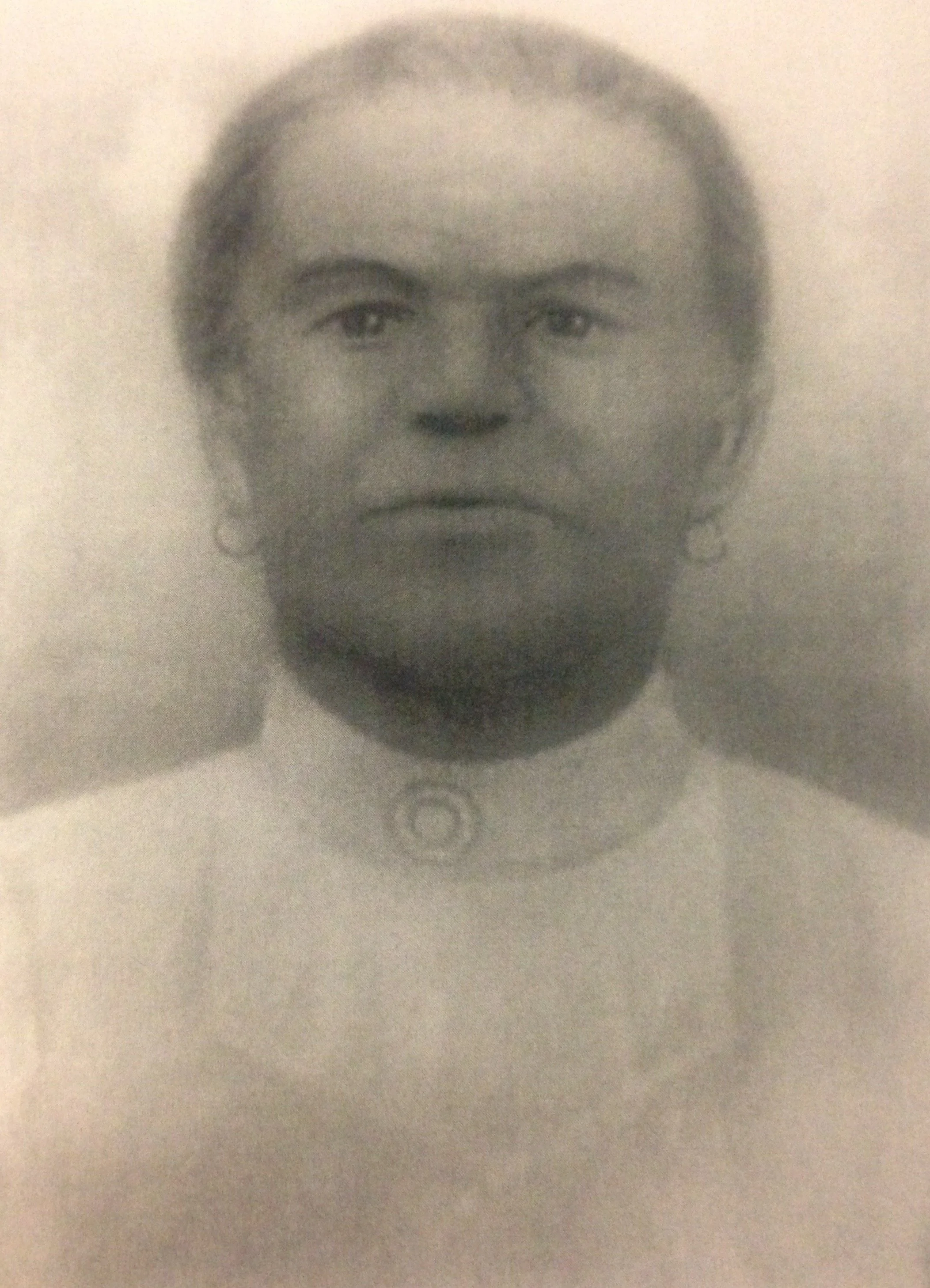
Matilda Everett Reynolds
1841-1932
I was ecstatic, but that happiness faded quickly. I discovered everything I could about Matilda, found the rest of her descendants on Facebook, and attended a Reynolds Family Reunion in 2017. Unfortunately, the information I shared about Matilda was not received well because it didn’t match what the elders in the family knew about her. The information I was most certain about is the same information that was rejected by my relatives because they had never heard anything about it. Because of that, I have never published anything about Matilda. Recent genetic evidence has verified the documentary evidence I found in 2017, prompting me to officially share her story for the record. I will also address the points of contention with my cousins in hopes of resolving their concerns.
The most important fact, most easily verifiable fact, and fact most disputed by my cousins, concerns the name Reynolds. This was Matilda’s married name. Matilda’s grandchildren were never told about her having a husband, but that doesn’t mean he didn’t exist. I knew this immediately upon discovering Matilda, because Benjamin Reynolds’ death certificate clearly lists his parents as William Reynolds and Matilda Everett. The informant was Matilda’s son, Byrd Reynolds, and the signature is in Uncle Byrd’s own handwriting. Furthermore, she was recorded as a widow on four different censuses: 1880, 1910, 1920, and 1930. She is missing from the 1900 census, and 1870 did not ask marital status. Records can definitely be wrong, but when you have five distinct documents saying the same thing and none that contradict them, it might be worth considering that the records are based in truth.
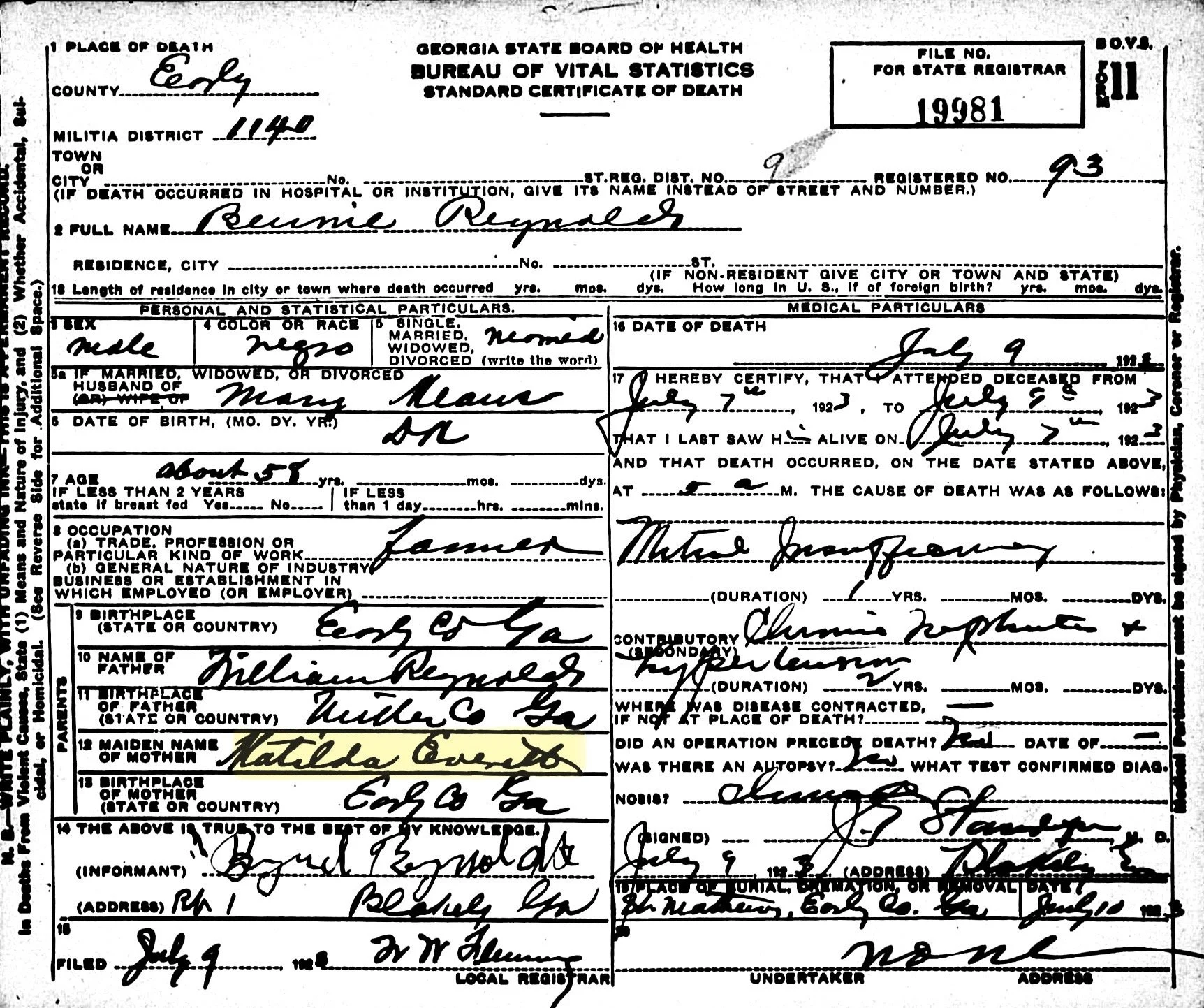
Everett was Matilda’s maiden name, and none of my cousins had ever heard that before. I completely understand their hesitance to believe this. Several of them actually knew Matilda as children. Somehow, that name was never mentioned until I brought it up in 2017. My hypothesis at the time was that Matilda was born enslaved in 1845 on the plantation of Abner Augustus Averitt in Early County, Georgia. The Averitts were the only slaveholding family in the area with a name similar to Everett. Matilda’s neighbors on the 1880 census were an older Black woman named Rose Averitt and her son, Ben Averitt. Since Matilda named her children Ben and Rose, the probability of my hypothesis being true was high.
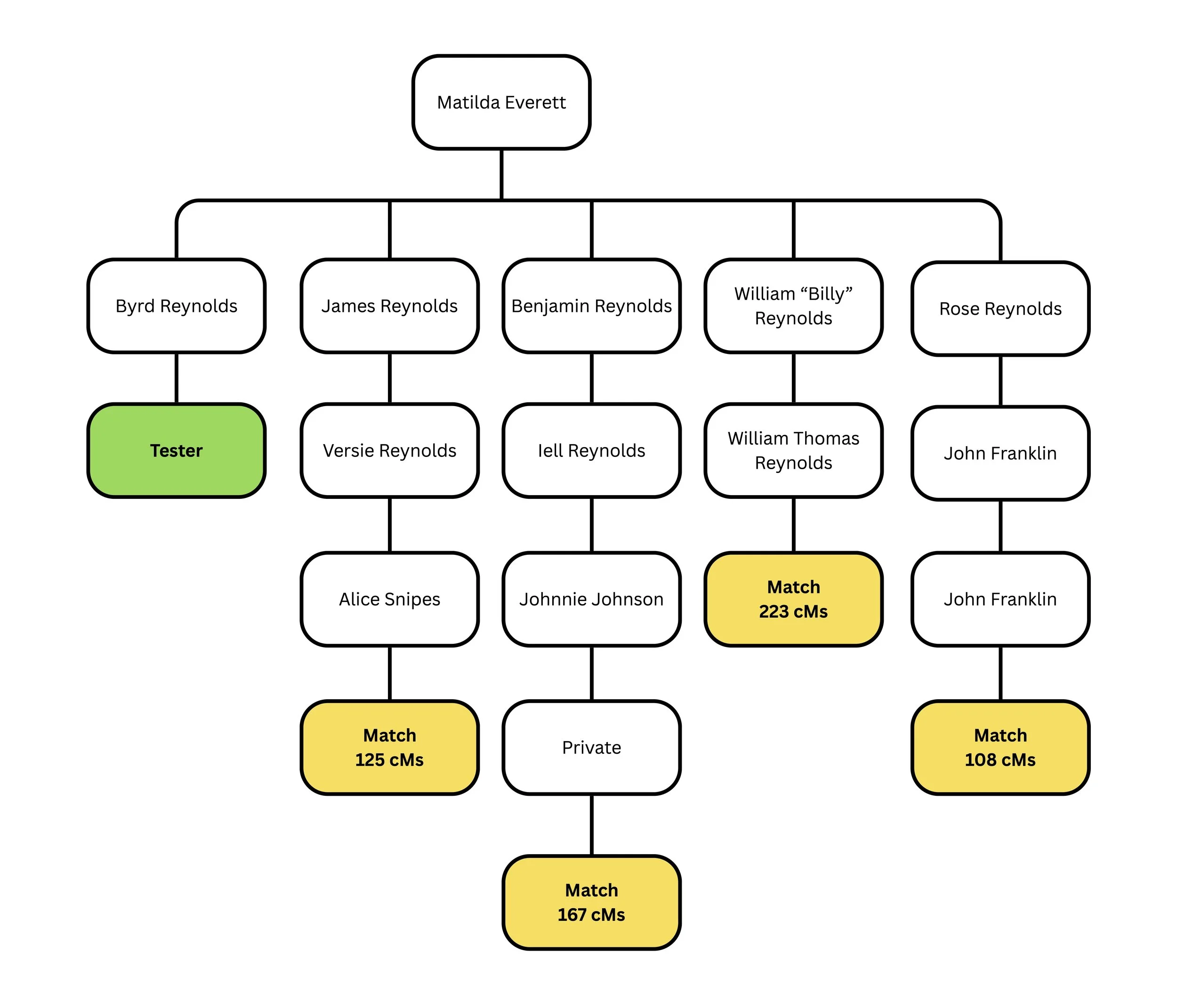
My mother took an AncestryDNA test in 2017, which connected me to Matilda’s great-granddaughter, Geraldine Wells Jones. Unfortunately, Cousin Gerry had just passed away. She lived near my hometown, Hartford, Connecticut, and she was Hartford’s first Black music teacher. I am sure we would’ve gotten along if we had the chance to meet. Her DNA results were very helpful once I gained access to them. She has a match at 99 centiMorgans (about the level of a 3rd cousin) with the surname Avirett! His ethnicity is 100% European. This supported my hypothesis that Matilda was enslaved by the Averitts. I also believed that Abner Augustus Averitt was the biological father of Matilda, but this turned out to be false. My cousins and I always agreed that Matilda probably had a white father, but it was years before I discovered his identity. Matilda had five children with known descendants, and only one of those five groups match the Averitts genetically. Now that all five branches have tested, it is clear who her parents were.
Matilda’s Origins and Young Life
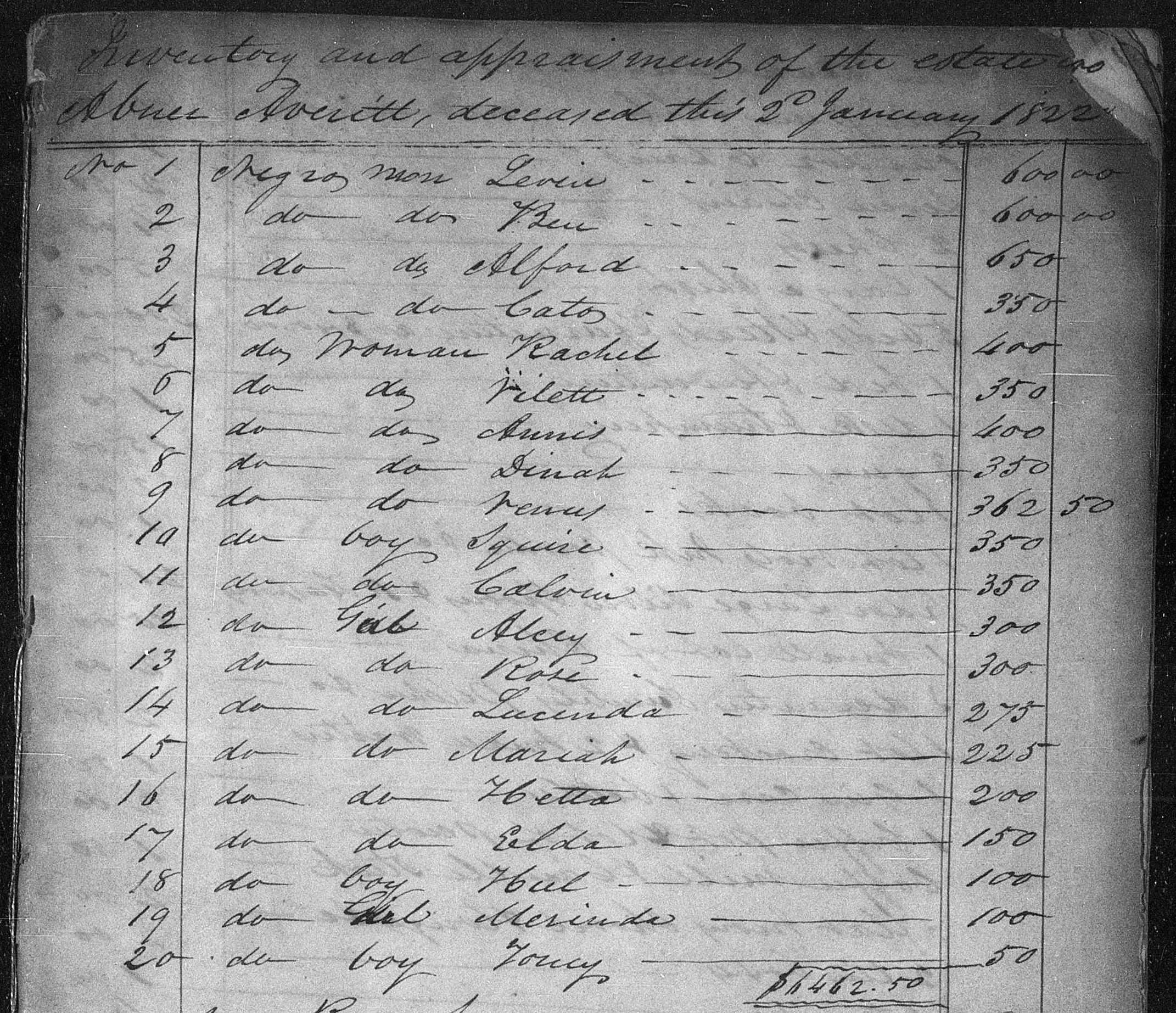
Matilda Everett Reynolds was born about 1841 in Early County, Georgia [1]. She was likely enslaved by Abner Augustus Averitt, who had just moved to Early County from Gadsden County, Florida in 1837. His father, Abner Averitt, died in Laurens County, Georgia in 1821. His estate inventory includes a list of the people he enslaved, including a young girl named Rose [2]. This was likely Matilda’s mother, Rose Averitt, who was born in 1810.
Rose Averitt had at least three children after Matilda. Allen Averitt was the only one enumerated in the same household with his mother. They were living together on the 1870 and 1880 censuses. The other two, Benjamin Everett and Mahala Everitt Lowe, were neighbors of Rose and Allen on the 1870 census. The informant on Benjamin Everett’s 1936 death certificate was Byrd Reynolds, Matilda’s son, who named Rose as the decedent’s mother [3]. Mahala’s great-grandson matches Matilda’s granddaughter at 165 cMs and her maiden name was recorded as Everitt on her daughter’s 1922 death certificate [4].
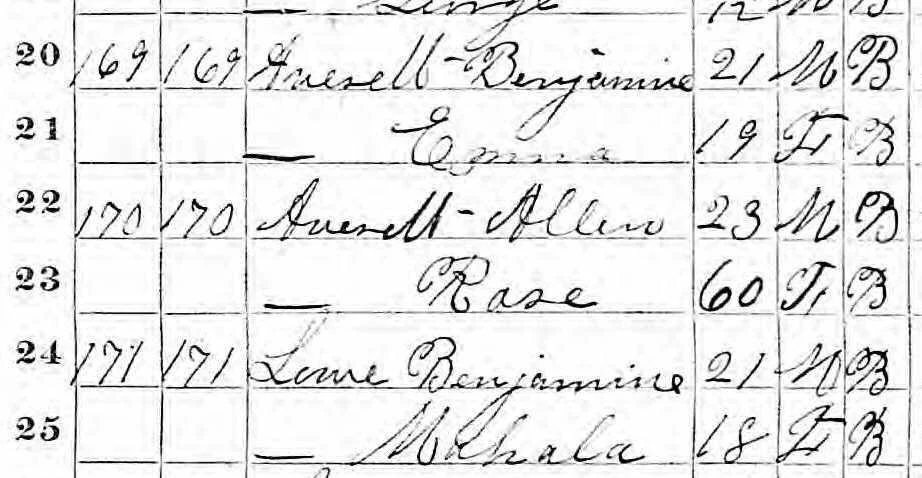
1870 Federal Census, District 4 and 5, Early, Georgia; Roll: M593_148; Page: 10A
Oral history claims that Matilda was partially Native American. There is no other evidence to support this so far. Rose Averitt was recorded as Black on the 1870 and 1880 censuses. None of the DNA results of her descendants show Native ancestry. However, they do show connections to formerly enslaved people in Gadsden and Leon County, Florida with the surname McGriff. This is evidence that Rose or one of her relatives may have been enslaved by the McGriff family at some point. Abner Augustus Averitt was married to Elizabeth McGriff. Furthermore, one of the Black McGriffs named his children Allen and Benjamin, just like Rose did [5].
Matilda’s biological father was Henry Jordan, a white man whose father lived about two miles north of the Averitt Plantation from 1835 until 1846 [6]. The genetic evidence strongly distinguishes Henry from the other members of his family. Matilda’s granddaughter matches numerous descendants of four of Henry’s children, as well as descendants of several of Henry’s siblings. When these matches were compared using DNA Painter’s WATO tool, the hypothesis that Matilda was Henry’s daughter scored nearly 38 times higher than the next-best placement within the Jordan family.
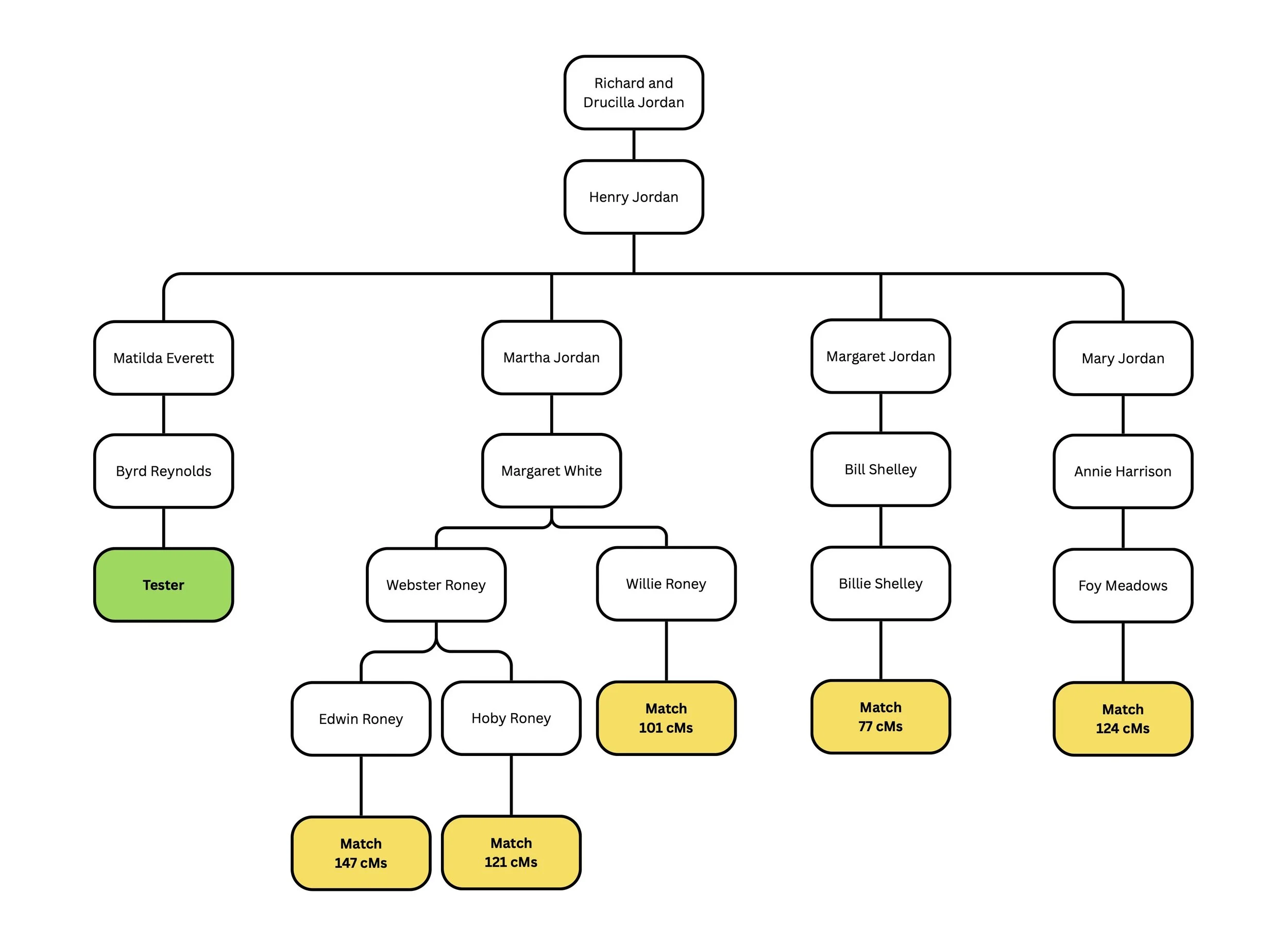
Henry was not an enslaver, and neither was his father, Richard. It has not yet been discovered how he came into contact with Rose Averitt. Henry was recorded as a blacksmith on the 1860 census, so it could be that he was hired to perform work on the Averitt Plantation [7]. Henry was a single man at the time of Matilda’s conception. While many trees on Ancestry claim he married Mary McDowell in 1842, he actually married Mary Jane Nance in 1845 [8]. The McDowell marriage happened near Atlanta, hundreds of miles away from Early County. I discovered the Nance marriage record in recent years from Randolph County, which bordered Early at that time. Henry and Mary later moved to Alabama where they were enumerated on the 1860 census living next to a Nance household. It is unclear whether or not Matilda ever knew Henry Jordan.
At some point, Matilda was likely gifted to Abner Augustus Averitt’s son, Lisbon, possibly upon his coming-of-age or his marriage. This hypothesis comes from a bill of sale, dated 9 Dec 1862, in which Lisbon sells Matilda back to his father along with the rest of his property [9]. It is unclear why Lisbon did this, but a likely explanation is that he needed the cash to settle debts. His father paid $5,200 for 500 acres of land, a horse, 10 cows, 100 pigs, various furniture items, farm tools, and three human beings. Lisbon was sued for debt at least once around the same time [10]. This was also in the middle of the Civil War, which was a financially uncertain time for everyone. When Abner Augustus Averitt wrote his will in 1874, he stated that Lisbon would not inherit a share of the estate because of what he had already received. This supports the likelihood that Lisbon had received property, including Matilda, from his father.
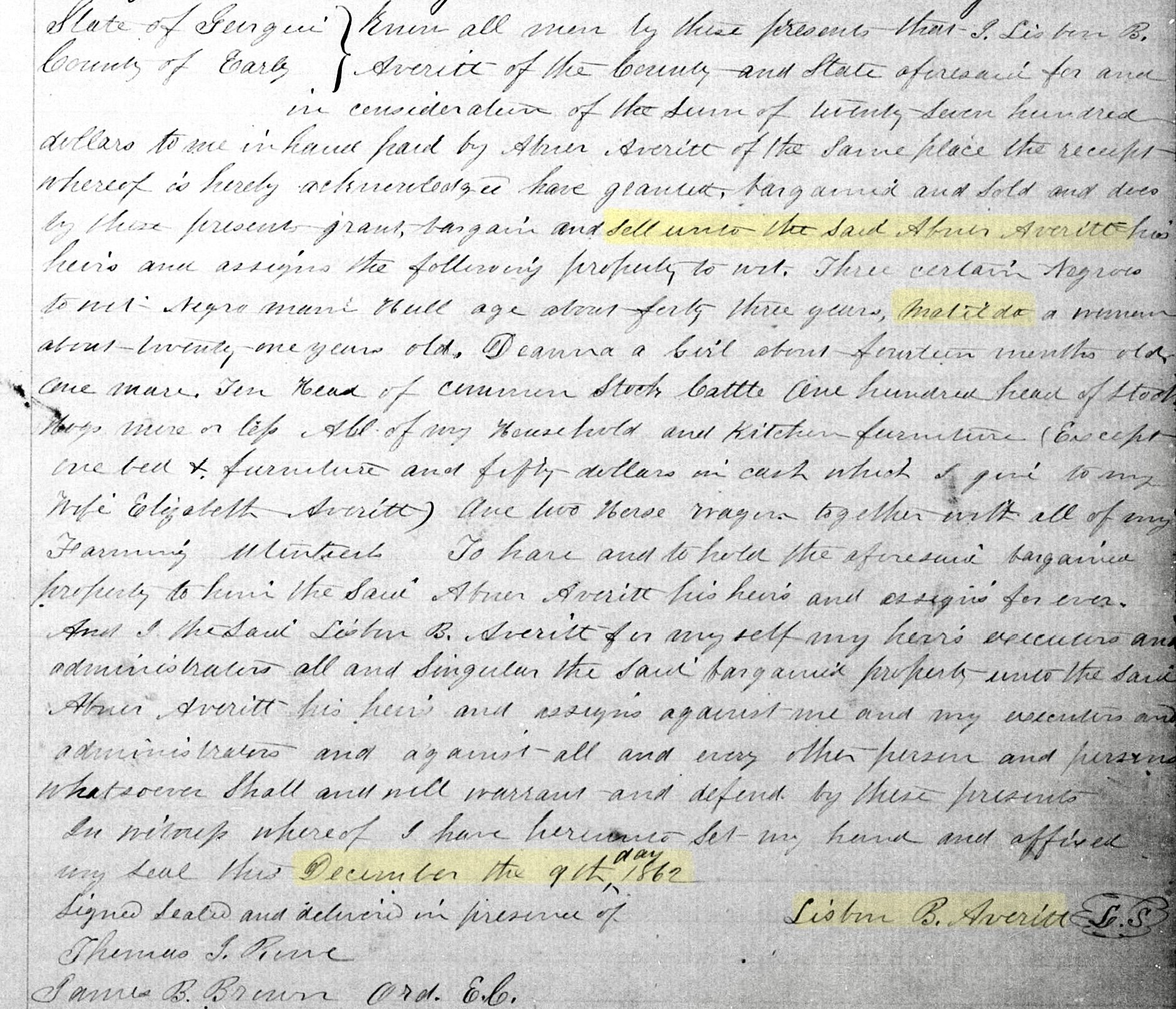
The bill of sale is an important record for understanding Matilda’s life. It is the first document that records her by name. It is the only explicit documentation of her enslavement, and corroborates the evidence pointing to Abner Averitt as her enslaver. Most importantly, it records her age as 21 in 1862. Matilda’s age was another point of contention among my relatives, who believed she was over 100 years old when she died in 1932. This is a very common argument that genealogists have with their relatives after discovering much more reasonable birth years for these matriarchal and patriarchal ancestors.
Before the bill of sale was discovered, I placed her birth around 1845, based on her age in the 1870 census. I believed it to be the most accurate record for determining the birth year of a formerly enslaved person because it is often the document closest chronologically to the event in question. Since that time, I have noticed that census takers in 1870 did a particularly sloppy job gathering information. Ages were far too often round numbers and wildly different from other census records which were more or less consistent. Entire pages of people were recorded as being born in Georgia (via ditto marks), while subsequent censuses show the same people consistently born in the Carolinas. In Early County, many entries don’t even include the resident’s first name.
Matilda’s case is similar. The 1870 census suggests she was born in 1845, but the 1880, 1910, and 1920 censuses all suggest a birth year of 1840. The 1930 census is another outlier, suggesting an 1834 birth year. Her death certificate two years later maintains the age of 96, pointing to an 1836 birth year. Obviously, she was not the informant on her death certificate, and she probably didn’t give the information on the 1930 census either. She may have known when she was born, even though there were no birth certificates in Georgia until the 1920s. In my experience, it is rare to see ages that are consistent with the passage of time being reported over three different census years for formerly enslaved people in Georgia. Since the age on the bill of sale is also relatively consistent, I now believe that Matilda was born in 1841.
Ironically, the date of the bill of sale is not particularly clear. Lisbon divided the sale of this property between two deeds: one for real estate and one for personal property (such as humans and animals). One deed clearly says 1862, but the other deed, filed on the same day, clearly says 1852. They both say December 9th. It is important to remember that the deeds in courthouse books are not originals. They were copied into the books by the hand of the court clerk on December 16th, 1862. The deed that says 1852 could not have been from 1852 because the two land lots referenced in it were not purchased by Lisbon until 1858 and 1860 [11]. The year written in the real estate deed is a mistake, while the personal property deed has the correct date. However, in future copies and index entries of the deed, both deeds have been given the 1852 date because the 1862 date was presumed incorrect. The personal property deed also contains clues that 1862 is the correct date. One of the enslaved persons mentioned was named Hull, likely Hull Faircloth who can be found recorded in Decatur County, Georgia after emancipation [12]. The bill of sale recorded Hull as a 43-year-old man. Lisbon’s grandfather, Abner Avirett, enslaved a boy named ‘Hul’ at the time of his death in 1821. This is likely the same person. Hull was one of the youngest people on Abner’s 1822 estate inventory, valued at $100, which is consistent with a birth year around 1819. Coupled with the aforementioned research on Matilda’s age and the dates of the land purchases, it is clear that both of these deeds are from 1862.
The third enslaved person in the 1862 bill of sale is a 14-month-old girl named Deanna. This is almost certainly the child of Matilda. This is consistent with the oral history passed down to my cousins. They were told that Matilda had several children during and after slavery who were taken away. I have not found any further records of Deanna, which would usually lead me to believe that she may have died young. In this case, the oral history along with the journeys of Matilda’s other children give reason to believe that something else may have happened. The discovery of Deanna is also transformative because of her name. It resembles the name Diana, often spelled Dinah on slavery records. There are only five enslaved women on the 1822 estate inventory of Abner Averitt, and one of them is likely the mother of Rose Averitt. Their names are Rachel, Vilett, Annis, Dinah, and Venus. It is possible that Deanna was named after her great-grandmother. Hopefully future research will provide evidence that can be used to evaluate this theory.
Matilda’s Marriage
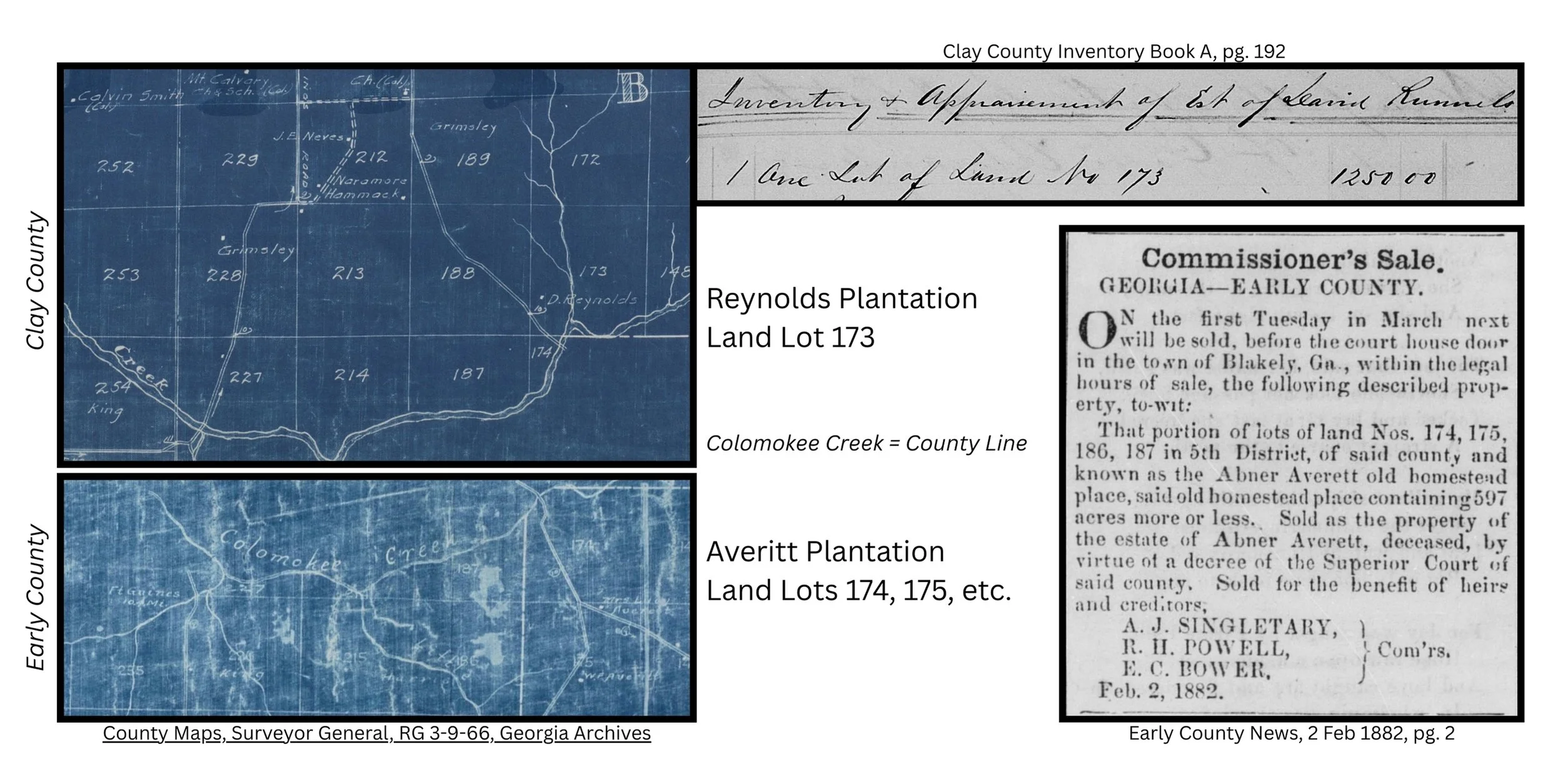
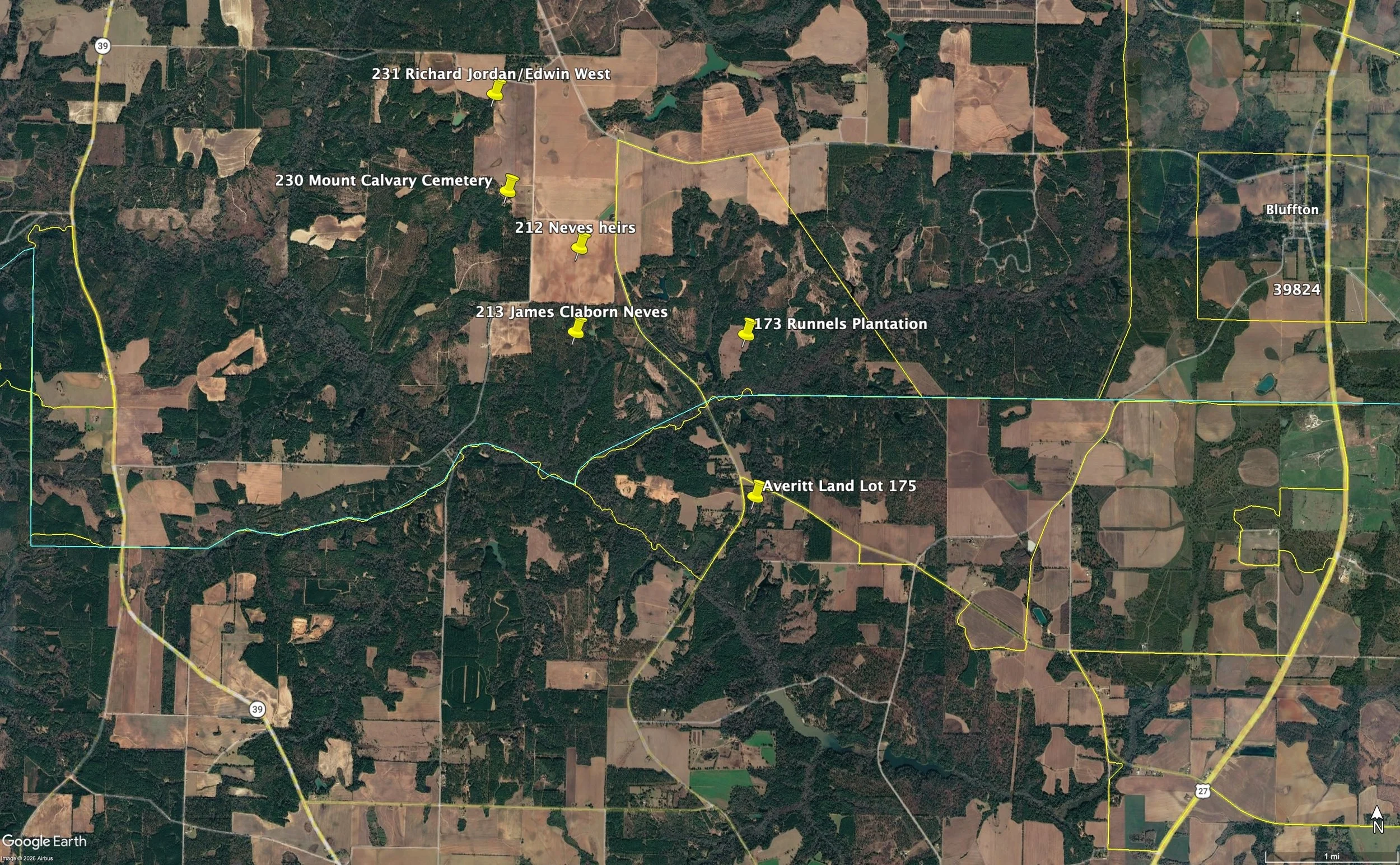
Deanna’s birth in the fall of 1861 also provides evidence for the beginning of Matilda’s marriage. Enslaved people couldn’t legally get married, but their unions were recognized as marriages by their enslavers. The Averitt Plantation was located on the banks of the Colomokee Creek. In 1852, the creek became the county border with the newly formed Clay County. On the other side of the creek was the Reynolds Plantation, owned by David Runnels. Without this knowledge, one might look at the Runnels family on the 1850 census in Early County and assume that they moved to Clay County by 1860. In reality, they didn’t move at all and they were still neighbors of the Averitts even though they were in two different counties.
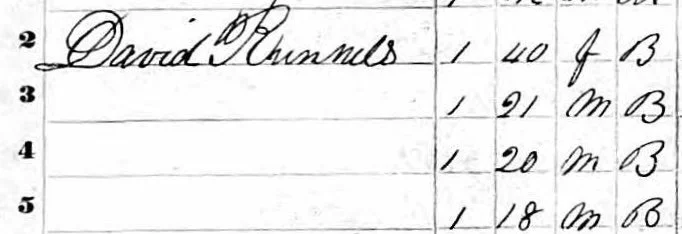
On the 1860 slave schedule, David Runnels only enslaved four people: a middle-aged woman and three young men [13]. Any of those men could be Matilda’s husband since they were all born within two years of 1840. According to Benjamin Reynolds’ death certificate, his father’s name was William Reynolds, of Miller County, Georgia. Matilda had a son in 1862 named James. According to his death certificate, his father’s name was Bob Reynolds.
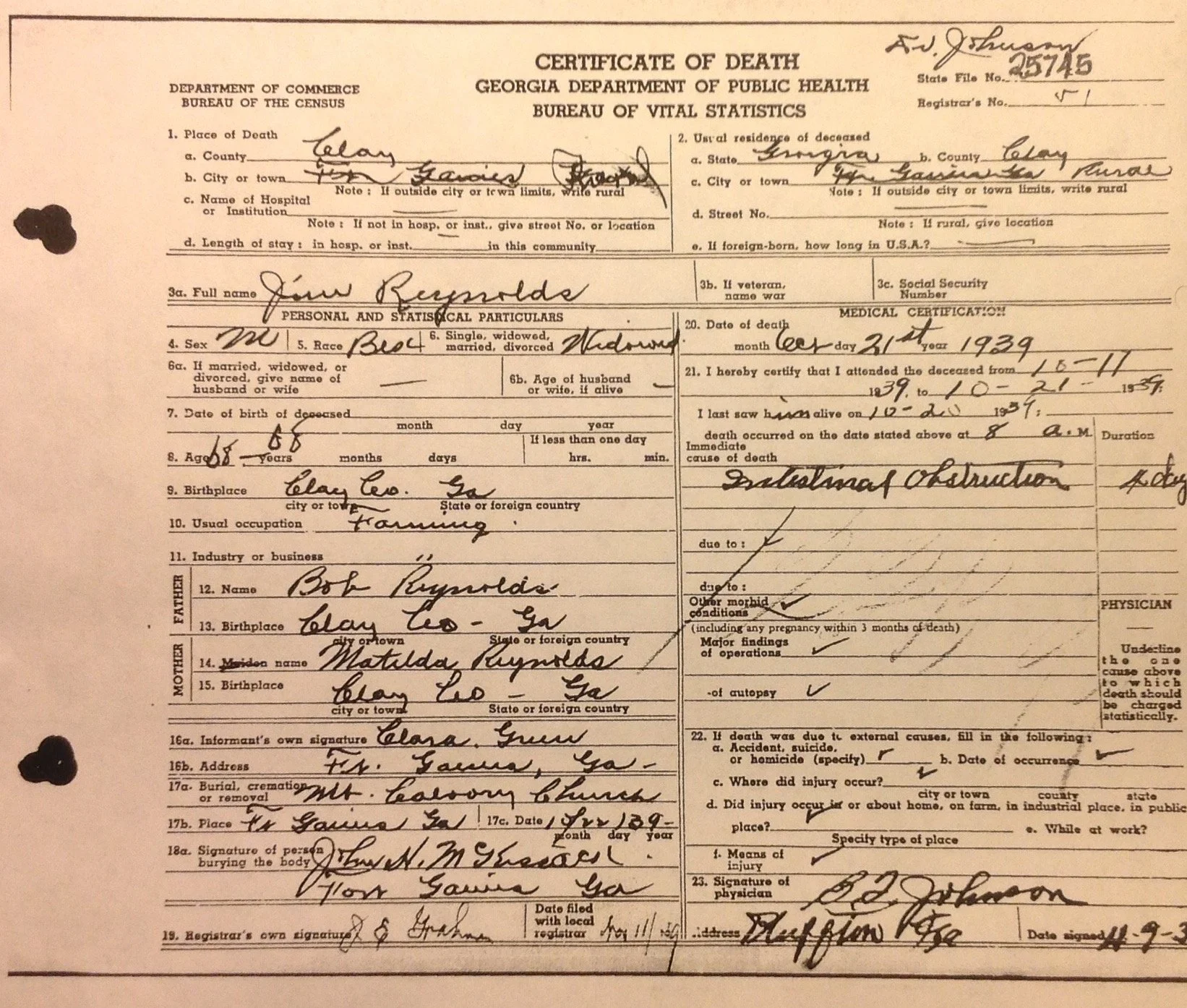
Over the last decade, I crafted a story in my head about how the name Bob must be a mistake. I figured that William must’ve died before the 1870 census, when his children were still toddlers. I found a man named Robert Reynolds in Miller County, Georgia after emancipation [14]. I figured that must be William’s brother, one of the three young men from the Runnels slave schedule. There was only one Runnels enslaving family in the area. A trace DNA match also led me to believe that the enslaver David Runnels was the father of those men. Thankfully, I was able to administer a DNA test to Benjamin Reynolds’ great-grandson which may have disproved everything I had imagined!
This particular cousin is a direct patrilineal descendant of Benjamin Reynolds, and therefore has the same Y-chromosome as Benjamin’s father. His Y-DNA belongs to haplogroup B-M181, an African paternal lineage. Other people with this haplogroup include comedian Chris Rock, and Emanuel Cumbo, one of the first documented Africans brought to Virginia [15]. Benjamin would not have this haplogroup if his paternal grandfather was his father’s enslaver. The DNA test also connected my cousin to descendants of Robert Reynolds, which seemingly supported my hypothesis that he was the brother of Benjamin’s father. But then, I noticed something unique. All of these matches descended from one of Robert’s sons, named William Robert Reynolds.
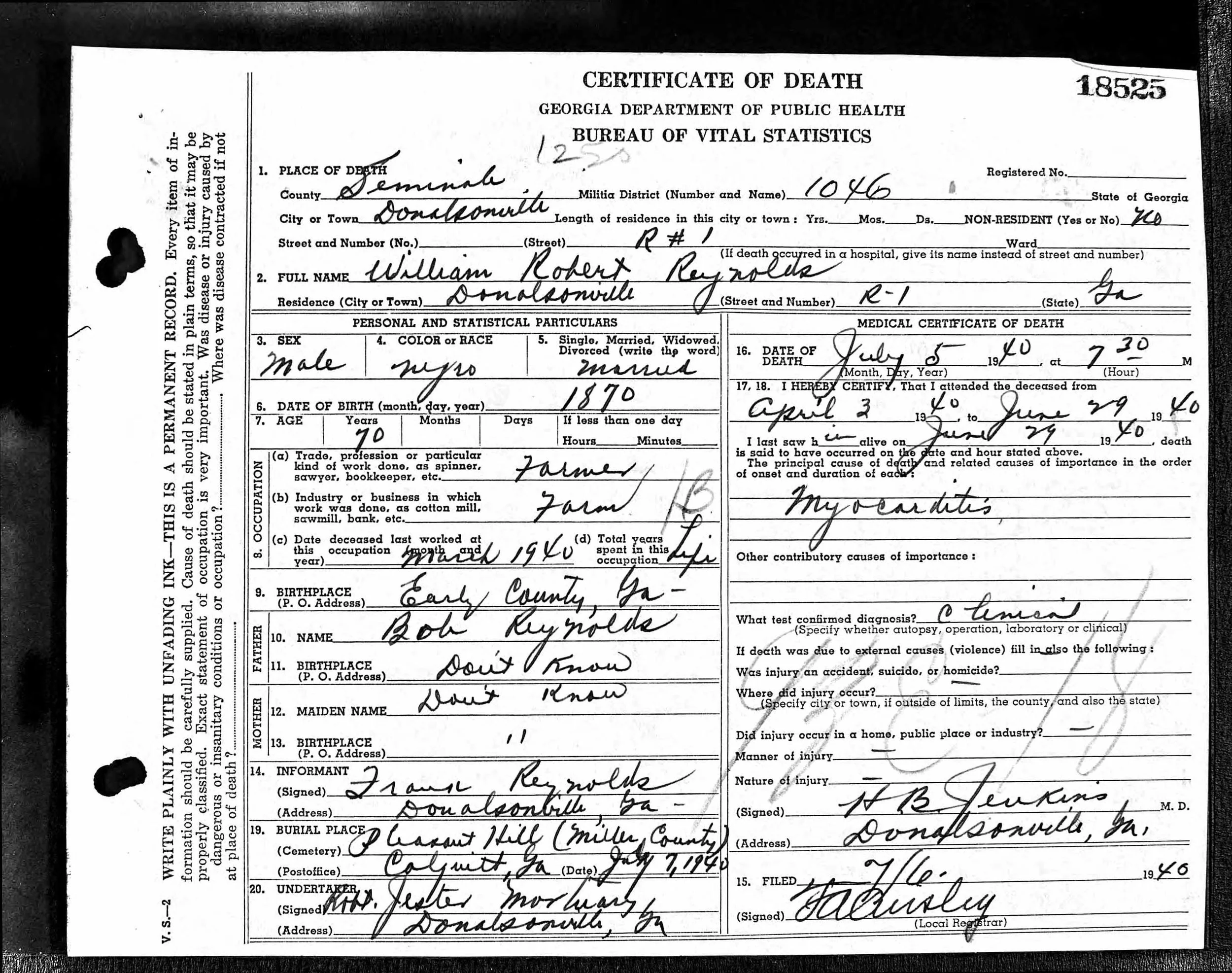
This name struck me with a possibility that had never occurred to me. What if James Reynolds’ death certificate and Benjamin Reynolds’ death certificate were both correct? What if their father’s name was both Bob and William? His full name could’ve been William Robert Reynolds, just like his son. He wouldn’t be the first person to be called mainly by their middle name. That is common in many cultures. This would mean that the Robert Reynolds who lived in Miller County is my direct ancestor, not an uncle. Benjamin didn’t lose his father as a young child, and Matilda was never actually widowed, but divorced. There is other evidence to support this theory. Benjamin’s death certificate states his father was from Miller County, which is where Robert lived. Robert had a wife named Rena Harris, who he married in 1869. This aligns with the time period he and Matilda would’ve separated. William Robert Reynolds was Bob and Rena’s first child under wedlock. Rena had many children before then, but there is no definitive evidence that any of them were fathered by Bob. Also, he was at least two years younger than her, making it even less likely that he fathered her oldest children. This theory is hard to prove definitively without a record corroborating that Bob’s first name was William. Unfortunately, the DNA matches are not conclusive because half 3rd cousins share a similar amount of DNA as 4th cousins.
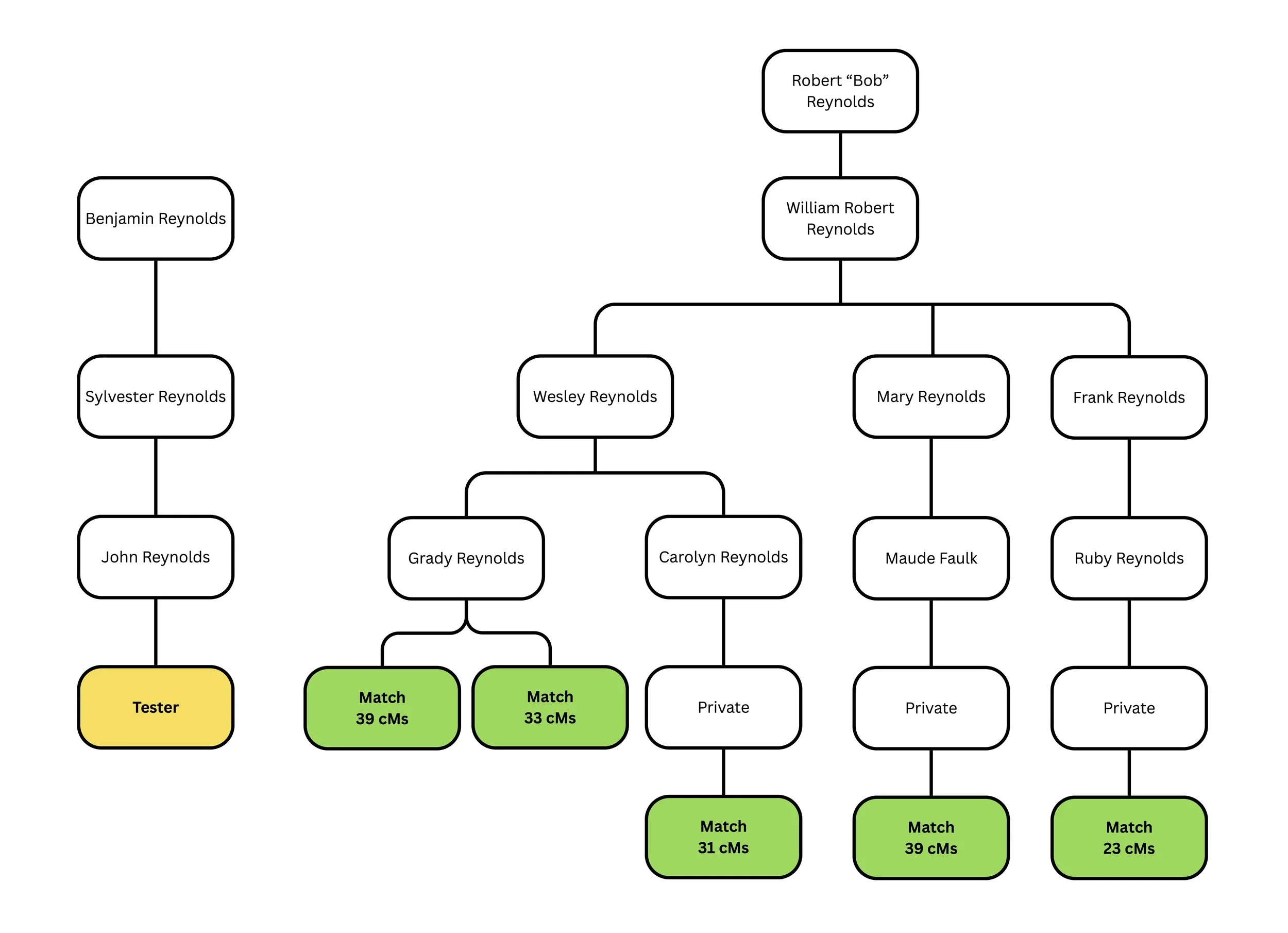
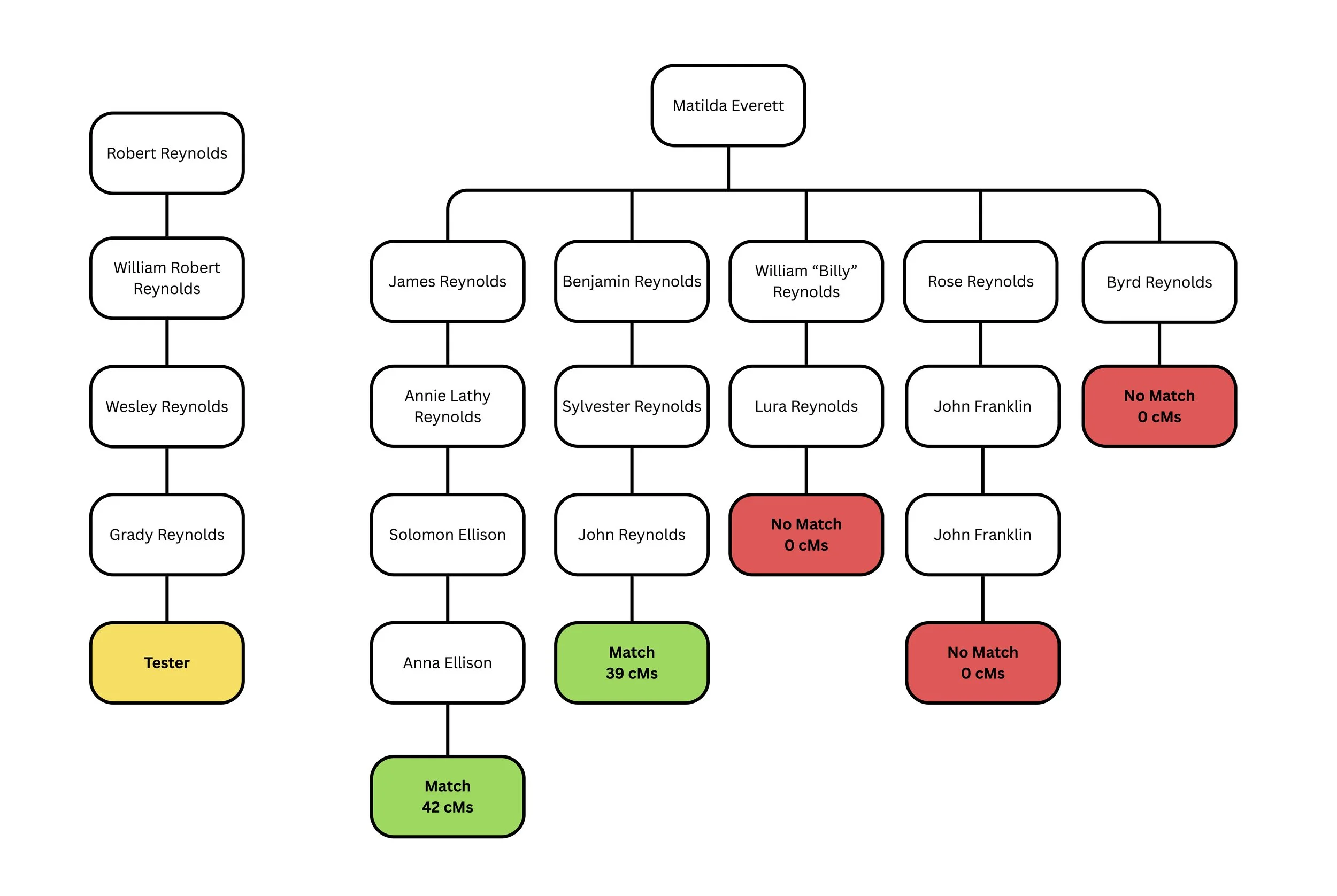
The DNA matches can prove that Matilda’s two oldest known sons, James and Benjamin, have the same father. Descendants of her younger three identified children have no genetic connection to the family of Robert Reynolds.
Uncle Billy
Matilda gave birth to a son named William Reynolds on October 8th, 1866 [16]. I will call him Uncle Billy to differentiate him from all the other men named William Reynolds. She likely named him after her husband, but his descendants are adamant that Billy’s father was a white man. They were correct about this. This may be obvious to some because Uncle Billy was so light that he could pass for white, but genealogists cannot rely solely on someone’s appearance to determine their ancestry. Genetics are much more complex than people realize, and everything is not always as it looks to the human eye.
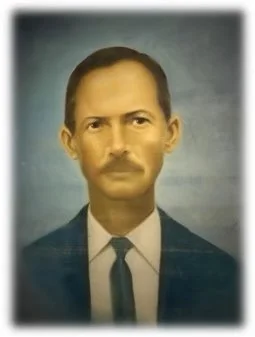
William “Billy” Reynolds
Some of Uncle Billy’s descendants believe he shared a father with twin brothers named Ennis and Grover Neves. There is no genealogical evidence of this. No one ever heard Uncle Billy or any of his children claim that his father was a Neves. My cousins believe this story because the Neves twins assisted Billy with learning to read, write, and purchase land. Billy’s descendants were protected in the community and received special privileges that seemed unusual for rural Black families before Civil Rights. Unfortunately, close associations with a white family do not indicate a genetic connection. Ennis and Grover’s father’s name was James Claborn Neves. He was born in 1852, and therefore only 14 when Uncle Billy was born. Most 14-year-old boys can father children, but these circumstances make that highly unlikely.
Undoubtedly, Matilda knew James Claborn Neves his whole life. His father, John Neves, had a plantation enumerated adjacent to Abner Averitt’s on the 1850 slave schedule. As with the Runnels land, the Neves property fell into Clay County upon its creation in 1852. The Neves and Runnels families are only one household apart from each other on the 1860 census in Clay County. Matilda may have been hired out to work for the Neves at some point. Matilda worked as a cook for families in the area [17]. She also could have worked as a nurse for infants in the Neves family, including James Claborn Neves and his twin sons.
Thankfully, Uncle Billy had two daughters that were still alive when I discovered this part of my family. I have been able to talk with them about this in depth. They both knew that their grandfather was not a Neves. Their memories are often discarded by other relatives because they were so young when their father died in 1936. However, it was a conversation with one of these daughters that led me to discover the identity of Billy’s biological father. This daughter is still alive at the time of this writing. She told me that she knew her grandfather’s name when she was younger, but she never wrote it down. She can’t remember what it was, but she is sure it wasn’t a Neves or a Reynolds.
She told me that her father knew his father and lived with him as a young teenager. Apparently, Billy’s father was married and had one infant daughter. The four of them stayed together as a family unit in Fort Gaines, Georgia. This story sounds hard to believe, but I have heard stranger things. It is consistent with some of the stories my other cousins were told about Matilda’s children being taken away from her. Genetically, I already knew that Billy’s father was a member of the Averitt family, but none of the men in that family had only one daughter. Billy’s great-granddaughters share the most DNA with a great-great-granddaughter of Abner Augustus Averitt’s son Malcolm Nathaniel Averitt. Malcolm and his wife had two daughters, both older than Billy, so it didn’t fit the story from Billy’s daughter. But then, I noticed that Malcolm’s wife died in early 1880. I couldn’t find Malcolm on the 1880 census, and that made me even more curious. Eventually, I found an 1881 marriage record for “M. N. Averett” and “M. M. Gardner” in Levy County, Florida. It appears that Malcolm went to Florida to marry a very young woman named Mary Martha Gardner. Most importantly, they had one daughter named Ira Belle.
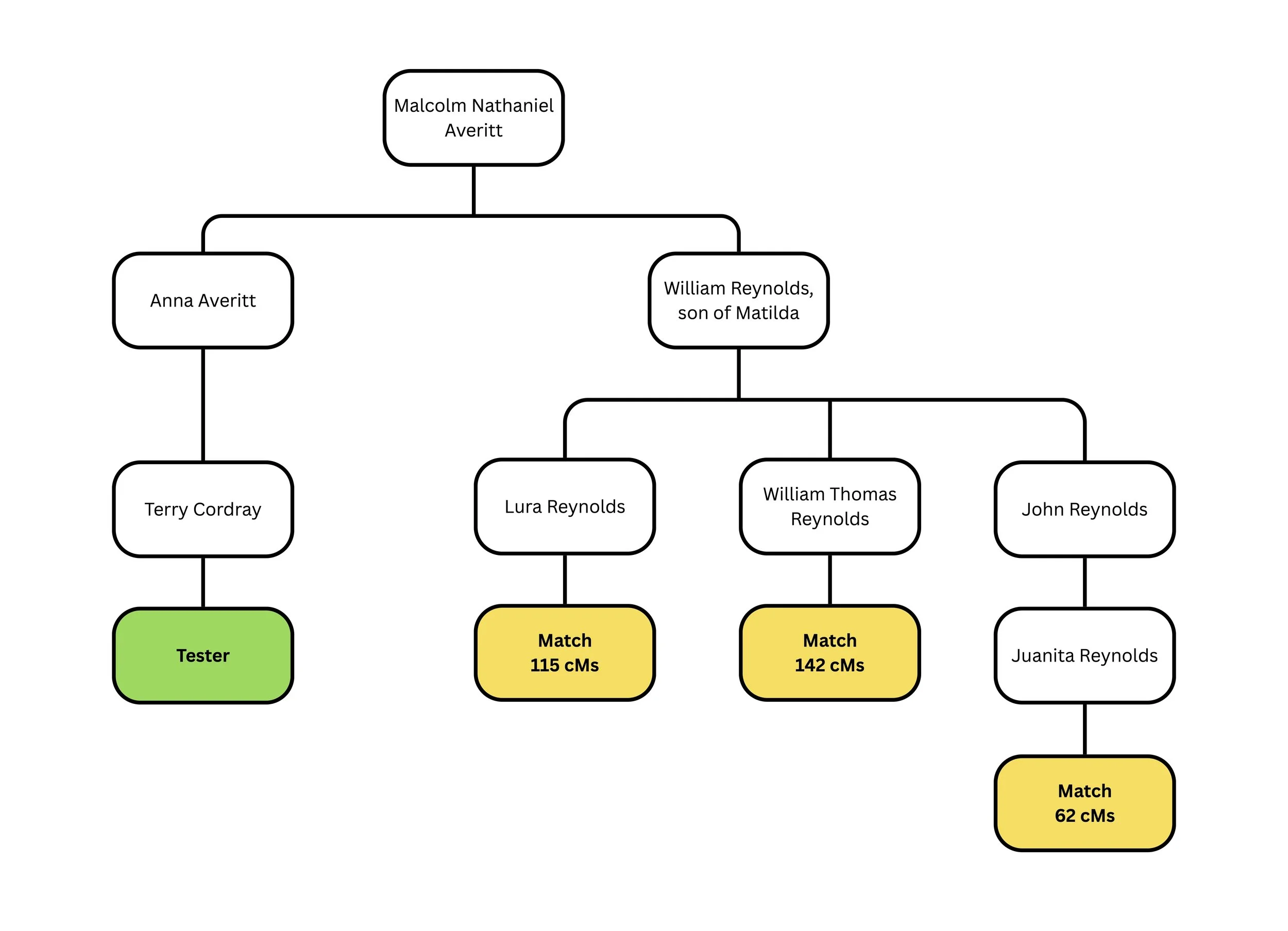
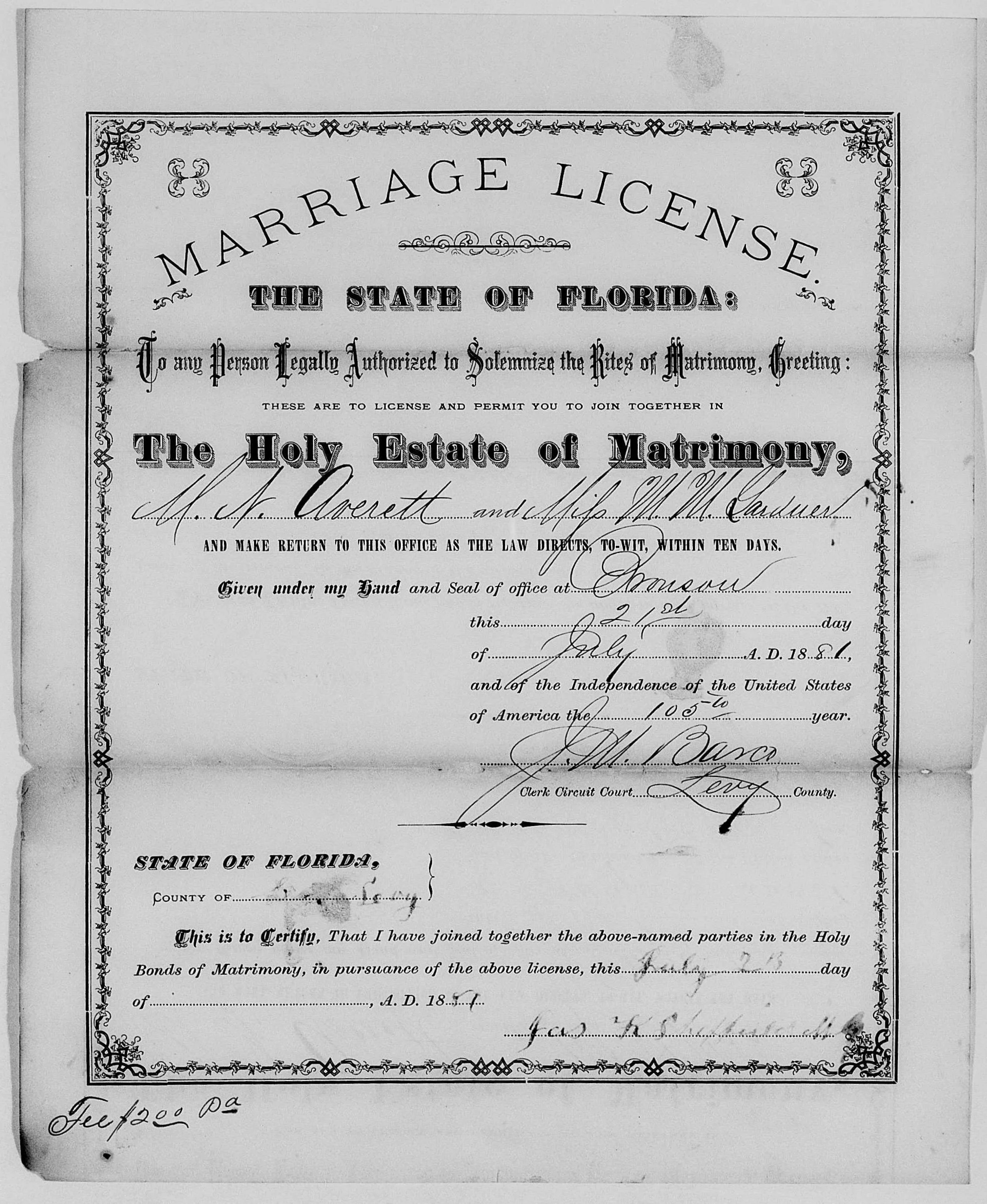
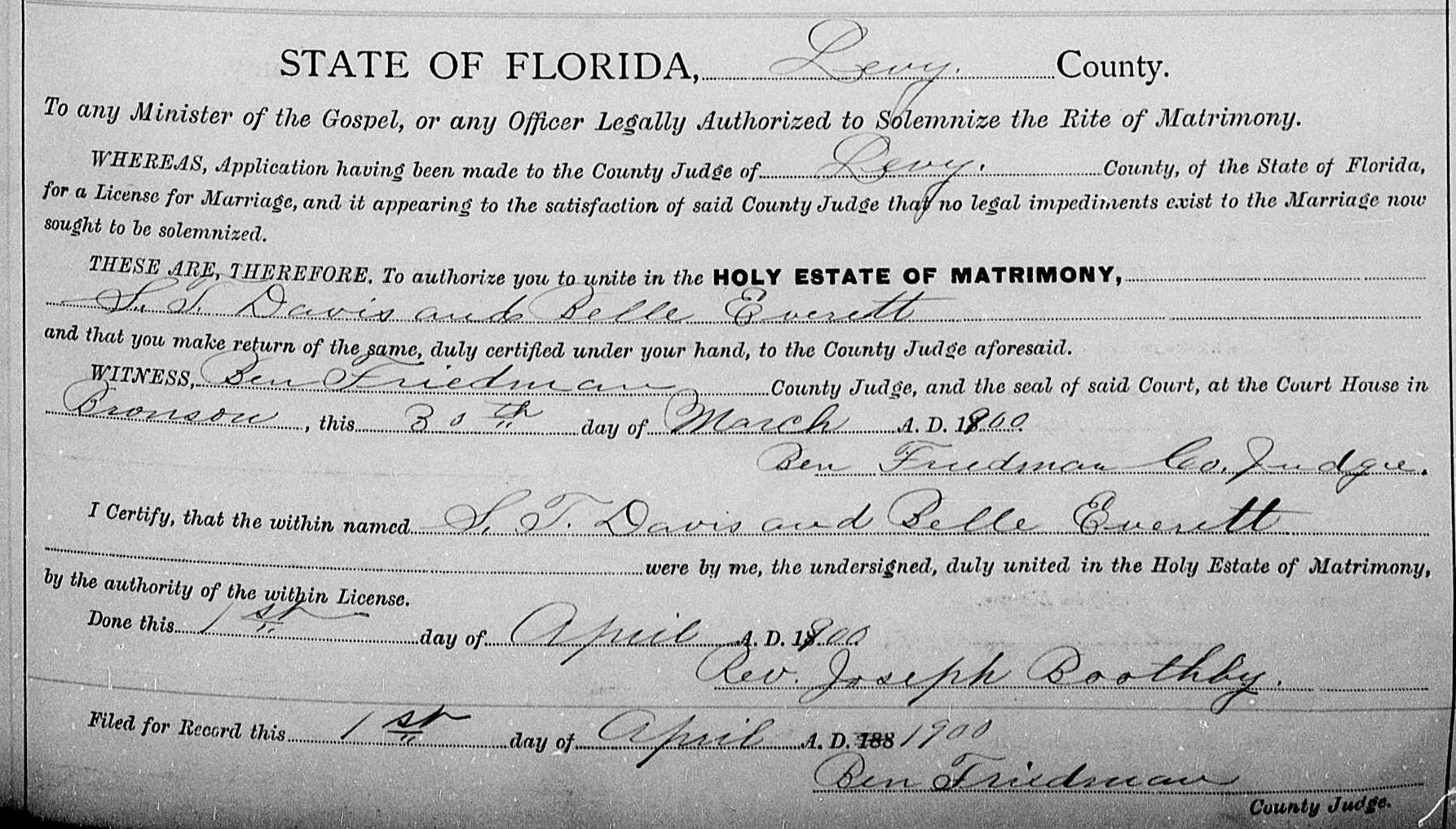
The timeline of Malcolm remarrying and having a daughter fits with the story told to me by Billy’s daughter. However, there is little other evidence to corroborate the story. Malcolm appears to have died before 1885, when his widow was enumerated on the Florida State Census with a new husband. There is no evidence that he brought his new family back to Georgia with him at any point. That being said, Malcolm was the only one of his siblings that was likely living in Clay County in 1880. A DNA probability tool called WATO plus calculated a 79% chance that Malcolm is the father, compared to 7% for Whitliff Averitt, 4% for Augustus Averitt, and down from there for other possible fathers.
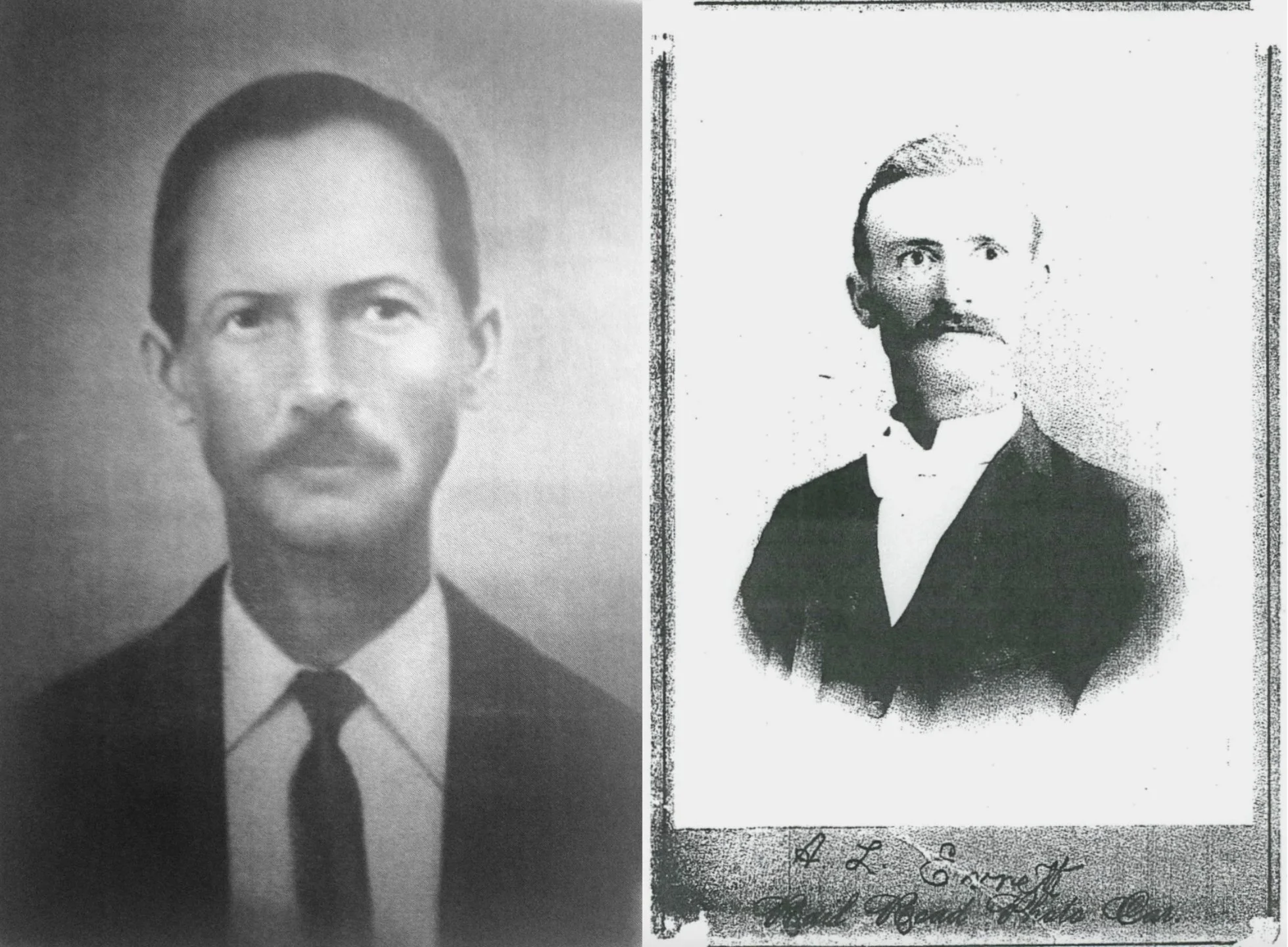
Although I don’t believe kinship can be determined by looking at someone, I would love to know if you think Uncle Billy looks like Malcolm Averitt’s legitimate son!
Matilda’s Freedom
Matilda gave birth to another son in February of 1870, but unfortunately nothing is known about him. He may have been another child that was taken away from Matilda. He was enumerated simply as “Babe” on the 1870 census, along with his mother and three older brothers. This record shows Matilda still clearly immersed in her former enslaver’s family. She was enumerated in between the households of Joshua Harris and his son Joshua Lewis Harris [18]. The younger Joshua was the widower of Frances Averitt, Abner Augustus Averitt’s daughter. Lewis was directly named in the will of Abner A. Averitt, as the husband of one of the heirs that had already received their share of the estate. Ironically, two of the other three heirs mentioned in this section were also closely associated with Matilda: Lisbon and Malcolm. Lewis was also the justice of the peace who performed the marriages of Matilda’s three oldest sons [19].
Matilda and her family moved to the Clay County side of the Colomokee Creek in the 1870s. The 1880 census enumeration order suggests that they were still very close to the area they had been enslaved in [20]. In the district called “McElvey’s”, Allen and Rose Averitt are dwelling #13, Ben Averitt is #15, Matilda and her children are #16, John Neves is #17, and Daniel Reynolds (son of David Runnels) is #19. By this time, Matilda had another child, who she named Rose. Rose used Reynolds as a maiden name, but her descendants’ DNA do not match the descendants of Robert Reynolds. Her death certificate from 1944 in Detroit names her father as Henry Braxton [21].
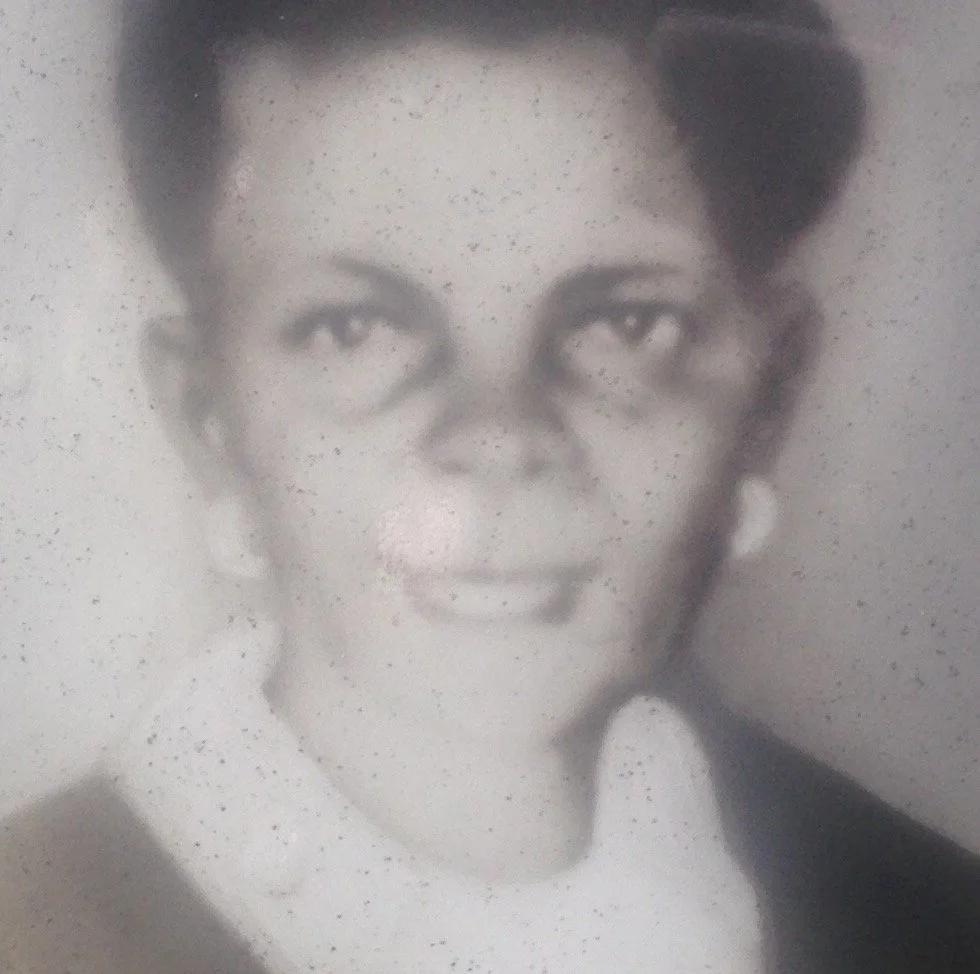
Rose Reynolds Franklin
In 1883, Matilda gave birth to her youngest child, Byrd. Those who believe Matilda was born in the 1820s have made up a theory that Byrd was not really her child. Genetic evidence disproves that theory. Byrd has a daughter who is still alive, and her DNA results clearly show she is the granddaughter of Matilda. On average, she shares roughly twice as much DNA with Matilda’s relatives as Billy’s granddaughters share with those same relatives. This would only occur if she was in a higher generation of the same family. Matilda was living with Byrd on the 1910, 1920, and 1930 censuses. They moved back to Early County by 1920, where they both died [22]. Byrd’s 1956 death certificate lists his father as Sam Terrell [23].
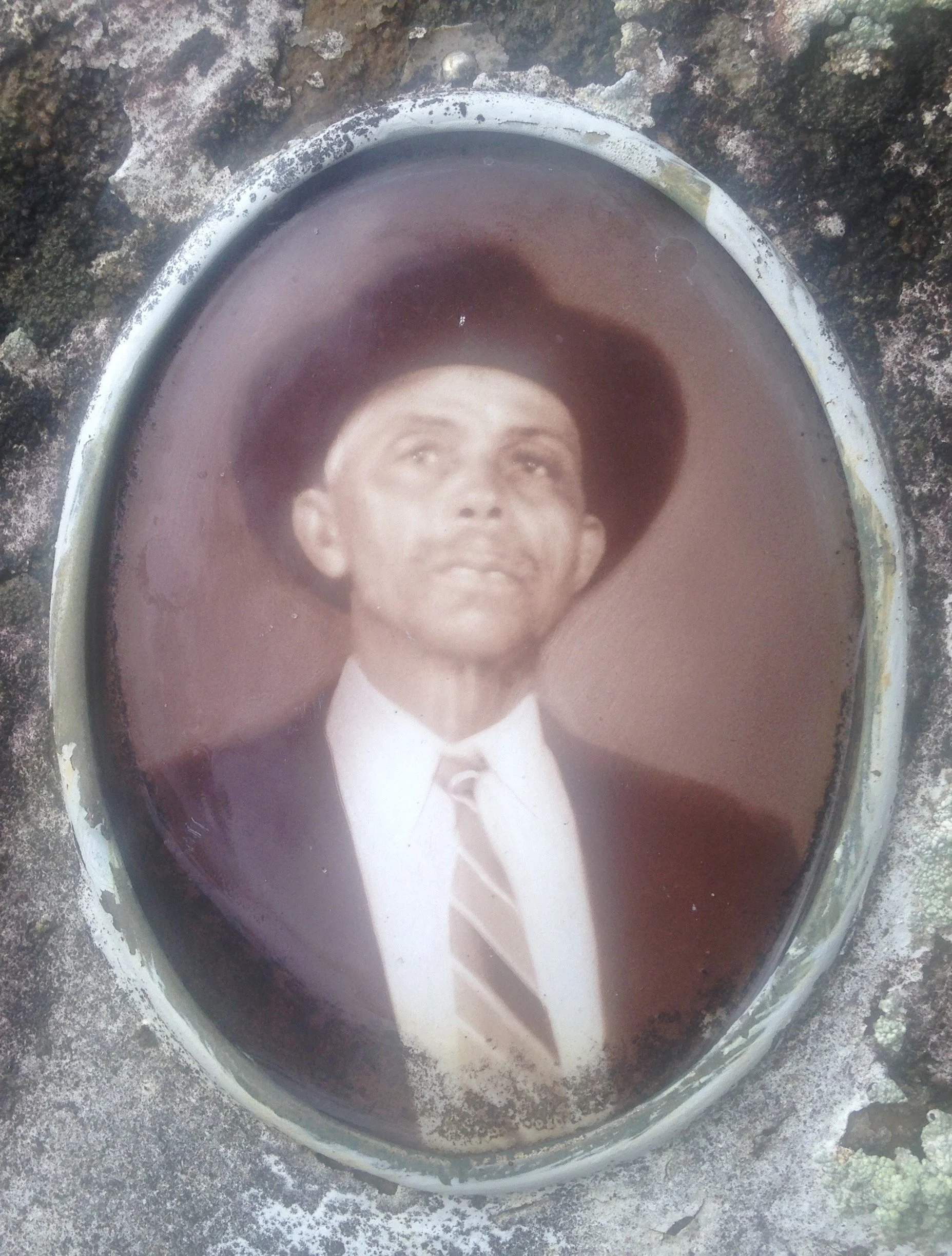
Byrd Reynolds
Byrd’s great-granddaughter is the comedian Sasheer Zamata, known for starring on primetime series such as Saturday Night Live, Woke, Home Economics, and Agatha All Along. She was a guest on a popular genealogy television show back in 2020, and the research they presented to her regarding Matilda Reynolds was embarrassing. The tree they gave her named Byrd’s father as “Mr. Reynolds”, showing that they didn’t even bother to purchase Byrd’s death certificate or view Benjamin’s (which was already publicly online and provided Matilda’s maiden name). Somehow, they saw Matilda widowed on the 1880 census and still came to the conclusion that she had a child with her husband in 1883. Somehow, they didn’t see all the records providing a first name for Matilda’s husband, and thought it was appropriate to call him “Mr. Reynolds” on a professional document.
This is why it is so important to work hard to verify and tell our own stories. Various biases have contributed to the mangling of Matilda’s life story in multiple public venues. The researchers of that television show did not have enough experience to understand that many women have given all their children the same surname, regardless of who the fathers were. Some members of my family choose not to honor Matilda’s marriage, because several of her children were born out of wedlock. My own biases led me to believe several false things I have already discussed in this writing. Thankfully, Matilda left so much behind through genetics, documents, and stories, allowing me to put the pieces together with a comforting level of certainty. Her truth will never be lost again.
Endnotes
1. Bill of Sale from Lisbon B. Averitt to Abner Averitt, 9 Dec 1862, Early County Superior Court, Blakely, Georgia, Deed Book L, pg. 819.
2. Estate Inventory of Abner Averitt, 2 Jan 1822, Laurens County Court of Ordinary, Dublin, Georgia, Inventories and Appraisements Book B, pg. 1.
3. Death Certificate of Ben J. Everett, 2 Jul 1936, Early County, Georgia Department of Public Health, State File No. 19172.
4. Death Certificate of Annie Canidolt, 11 Sep 1922, Early County, Georgia Department of Public Health, State File No. 25712.
5. Rental Agreement between John Mouchet and Turner McGriff, "United States, Freedmen's Bureau, Records of the Assistant Commissioner, 1865-1872," images, FamilySearch (https://familysearch.org/ark:/61903/3:1:3Q9M-C9TZ-HS2P-7?cc=2427901&wc=73QQ-X28%3A1513389702%2C1513389901 : 23 March 2017), Florida > Roll 11, Applications of freedmen for rations, 1868 > image 1084 of 1212, citing multiple NARA microfilm publications, Records of the Bureau of Refugees, Freedmen, and Abandoned Lands, 1861 - 1880, RG 105, (Washington D.C.: National Archives and Records Administration, 1969-1980).
6. Deeds from James Jones and Charles Chestnutt to Richard Jordan, 14 Feb 1835, Early County Superior Court, Deed Book D, pg. 198-199; Deed from Richard Jordan to Mary B. Grist and Richard J. Frederick Grist, 2 Dec 1846, Early County Superior Court, Blakely, Georgia, Deed Book G, pg. 23-24.
7. Household of Henry Jordan, 1860 Federal Census, Green Mill, Henry, Alabama, Roll: M653_11, Page: 81, Family History Library Film: 803011.
8. Marriage Record of Henry Jourdan and Mary Jane Nance, Randolph County Court of Ordinary, Cuthbert, Georgia, Marriage Book 1845-1860, pg. 586.
9. Bill of Sale from Lisbon B. Averitt to Abner Averitt.
10. Petition of Julia A Ashly against Lisbon B Averett for note due April 26th, 1863, Early County Superior Court, Blakely, Georgia, Declarations 1854-1878, pg. 325.
11. Deeds from Bryant Johnson and James Griffith to Lisbon Averitt, Early County Superior Court, Blakely, Georgia, Deed Book L, pg. 761 and 765.
12. Hull completed his Reconstruction Oath in Early County and was taxed in Decatur County over various years. Abner Augustus Averitt had a brother in Decatur County.
13. 1860 Slave Schedule for David Runnels, Clay County, Georgia, District 969, pg. 27.
14. Household of Robert Runalds, 1870 Federal Census, Miller, Georgia, Roll: M593_165, Page: 423B.
15. https://discover.familytreedna.com/y-dna/B-M181/story
16. Find a Grave, database and images (https://www.findagrave.com/memorial/249930967/william_m-reynolds: accessed 21 Sep 2026), memorial page for William M. “Uncle Billy” Reynolds (8 Oct 1866–29 Sep 1936), Find a Grave Memorial ID 249930967, citing Mount Calvary Church Cemetery, Fort Gaines, Clay County, Georgia, USA, Maintained by Orice Jenkins (contributor 51304087).
17. Oral History from Emma Zamata Reynolds Moore; Household of M Raynolds, 1870 Census, District 4 and 5, Early, Georgia, Roll: M593_148, Page: 1A.
18. Household of M Raynolds, 1870 Census.
19. Marriage Record of Joshua L Harris and Frances Averitt, 24 Jan 1854, Early County Probate Court, Blakely, Georgia, Marriage Book 2, pg. 225; Last Will and Testament of Abner Averitt; Marriage Record of Jim Runnels and Alice Bryant, 29 Jan 1884, Clay County Probate Court, Fort Gaines, Georgia, Marriage Book C, pg. 304; Marriage Record of Bennie Runnels and Mary Mason, 31 Oct 1885, Clay County Probate Court, Fort Gaines, Georgia, Marriage Book C, pg. 366; Marriage Record of Billy Runnels and Mary Stringer, 23 Dec 1886, Clay County Probate Court, Fort Gaines, Georgia, Marriage Book C, pg. 414.
20. 1880 Census, McElveys Mill, Clay, Georgia, Roll: 140; Page: 404b and 405, Enumeration District: 013.
21. Death Certificate of Rosa Franklin, 17 Dec 1944, Michigan Department of Health, State File No. 330646.
22. Death Certificate of Matildia Reynolds, 9 Aug 1932, Georgia Department of Public Health, State File No. 19060.
23. Death Certificate of Byrd Reynolds, 8 Jul 1956, Georgia Department of Public Health, State File No. 16052.