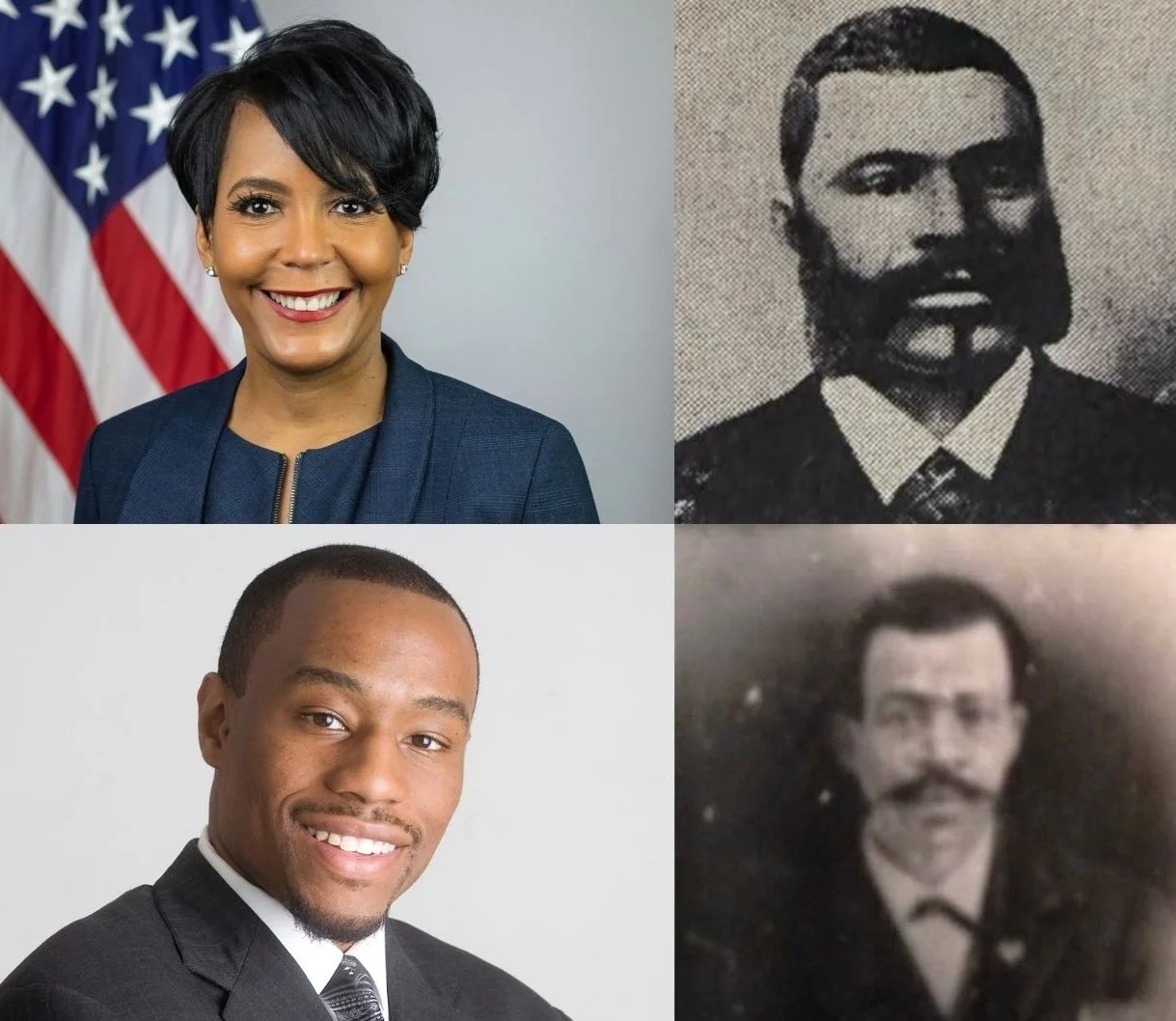
Clockwise: Keisha Lance Bottoms, her great-great-grandfather Shepard Peek, Joseph Hill, his great-grandson Marc Lamont Hill.
Dear friends: if we are talking about slavery in America, I don’t want to hear anything about indentured servants. I don’t want to hear about the Irish or the Exodus. I don’t even want to hear about Africans, unless it’s directly relevant. Most of the topics used to dismiss the effects of slavery are completely irrelevant to the system of chattel slavery that operated in America for centuries. I don’t like to compare traumas, so I am not going to say that chattel slavery was worse than indentured servitude or some foreign form of slavery. But objectively, chattel slavery was entirely different from any kind of oppression that has ever occurred in this world. More importantly, it is the most documented form of domestic terrorism ever. Most of the surviving probate files for the slaveholding counties and towns are available online, for free. These are the records that name exactly who was enslaved and by whom. This is unique to chattel slavery: we can find their names and trace their families.
I am writing this because people will try to say that these records can’t be found. They will try to say that they were all destroyed during wartime. They will try to act like slavery was many years ago and that these records have been lost to time. I am here to tell you that slavery was just the other day. This was inspired by the election of Keisha Lance Bottoms. She will be Georgia’s first Black governor. More Black governors were elected in one night (4) than had ever been elected in American history (3). The Atlanta Journal-Constitution posted an article sharing Keisha’s descent from Shepard Peek, a formerly enslaved man from Taliaferro County, Georgia. He was her great-great-grandfather. That is a very tangible, relatively recent relationship. Most of the Black people I communicate with are about the same distance from slavery as Keisha. However, those that downplay the current relevance of slavery aren’t aware of this. When they are told, they doubt it. The comments under the article showed people literally confused by the lack of distance from Keisha to an enslaved ancestor.
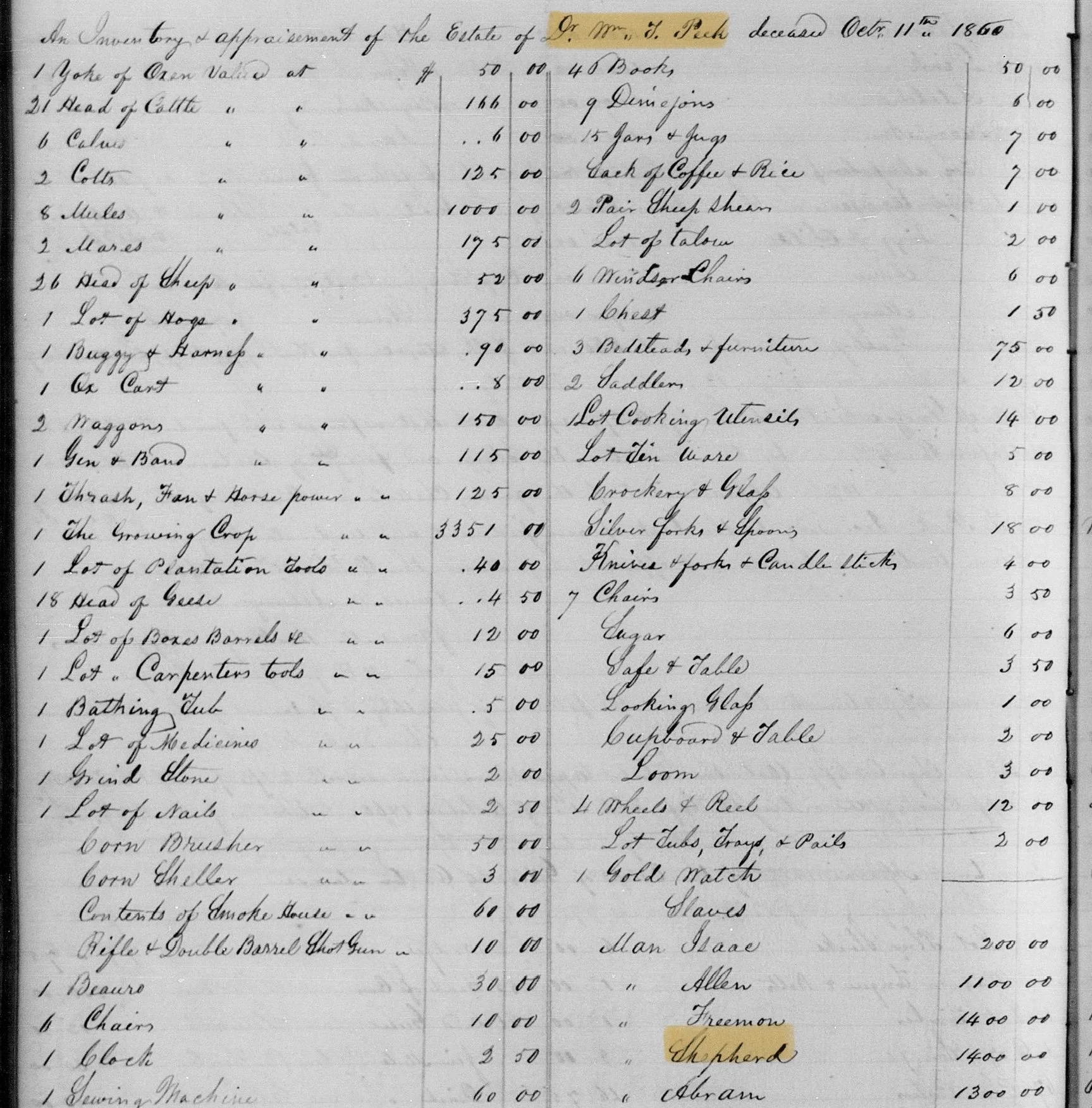
Taliaferro County Courthouse, Inventory Book C, pg. 270.
I noticed a similar confusion a few weeks ago, when Marc Lamont Hill went viral for claiming that his great-grandparents were enslaved. One great. Not great-great. Not great-great-great. Just great. He knew it was a true statement when he said it. His grandfather was born in the late 1800s so it makes perfect sense. And yet, the contrarians on Twitter chose to call him a liar, some of them even claiming it was statistically impossible. That’s when I decided to step in. Marc didn’t need my help. He has a PhD from an Ivy League university so he can hold his own. But the ancestors he was referring to were from Wilkes County, Georgia, which neighbors Taliaferro County, and Greene County (where my family lived). I know the records in this area very well and set out to provide the contrarians with documentary evidence to support Marc’s family history.
The evidence was clear: Marc’s great-grandfather Joseph Hill was born enslaved. I made this inference quickly, because Joseph was not enumerated on the census in 1860. I checked that first because some of the contrarians conceded Joseph was born before slavery ended, but insisted that it was more likely he was a free person of color. Wilkes County did have a small community of free Black people, but the Hills were not a part of it. The negative evidence from the 1860 census may have been enough proof, but I still wanted to find a document specifically naming Joseph as someone’s property. I never did, but I was able to find a document showing his parents and siblings recorded as the property of Wylie P. Hill. Marc already knew from oral history that they were enslaved by this family. Wylie P. Hill had a brother named L.M. Hill. Marc’s father and grandfather had the same name. The document showing Joseph’s mother is most important because the status of ‘slave’ was inherited maternally. Since she was enslaved, her children born before emancipation were enslaved too.
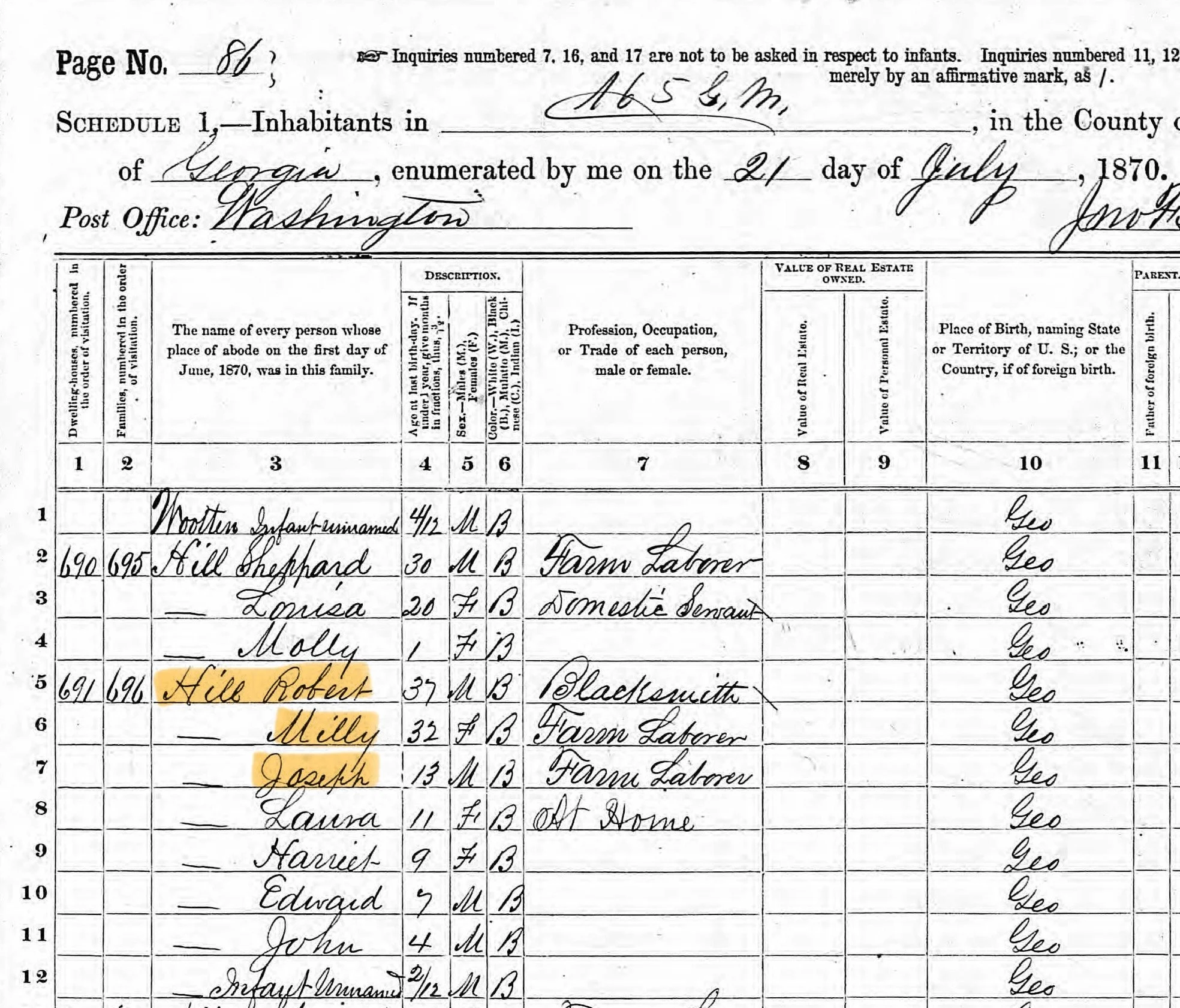
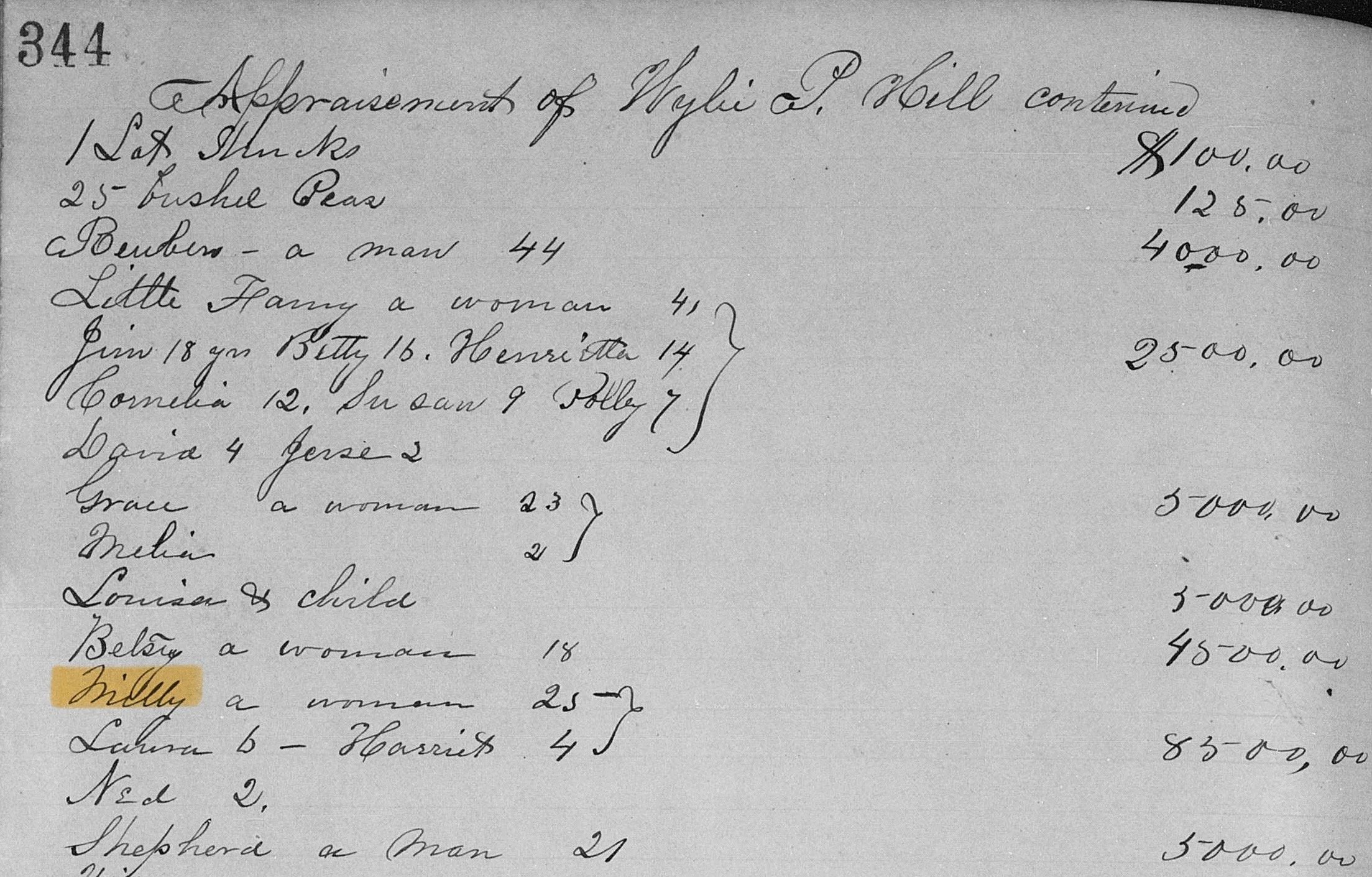
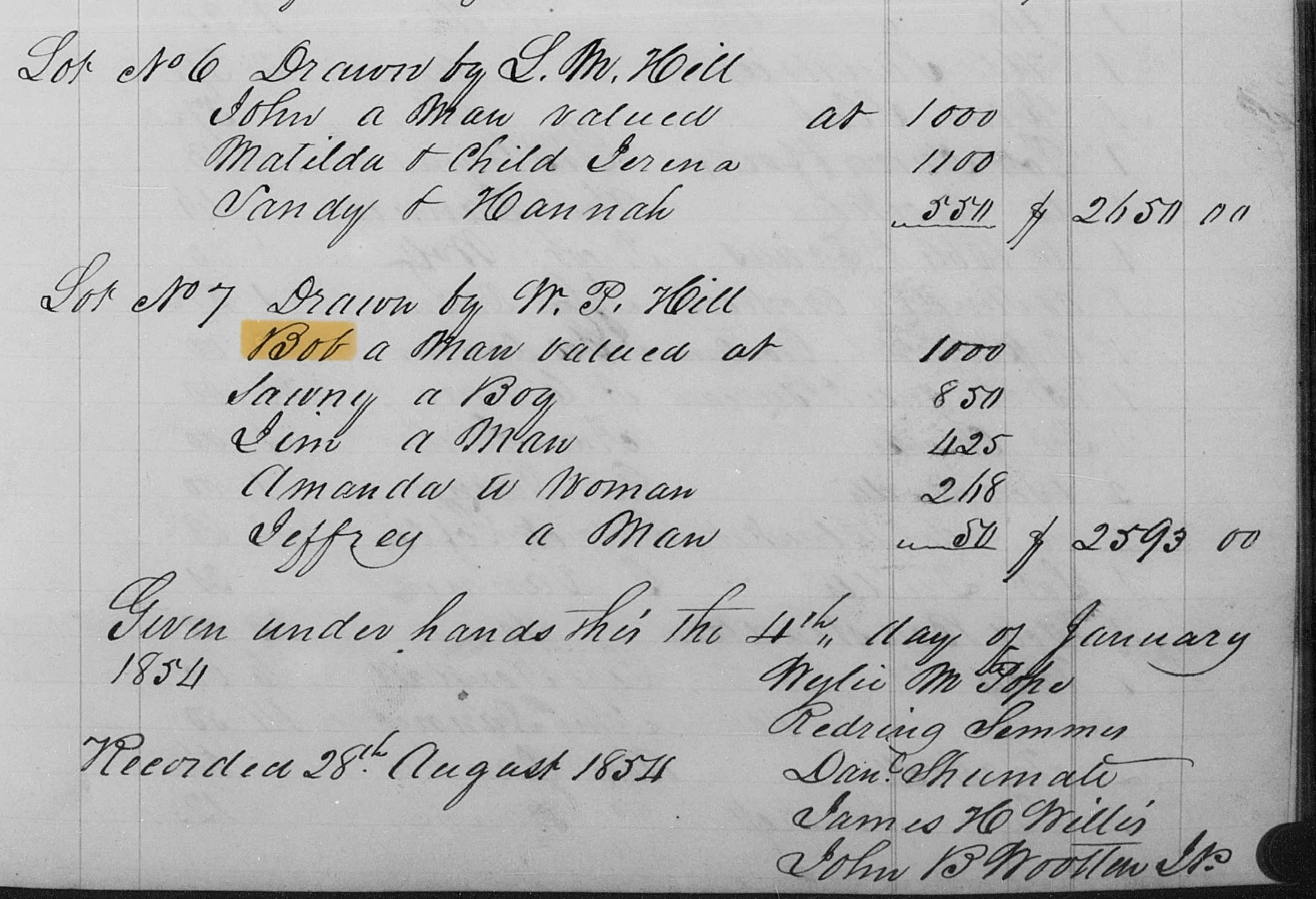
Wilkes County Courthouse, Inventory Book, 1860-1869, pg. 344; Inventory Book 1853-1860, pg. 158.
I don’t know who saw my Twitter responses to these individuals so I thought it was important to share this story here, in light of people doubting Keisha Lance Bottoms. If more people knew how recent slavery was, they would understand this country much better. I have often heard election officials say they don’t believe in reparations for something that happened 10 generations ago. One of them said we should get over it - it happened 250 years ago. Their math is gravely incorrect.
I am a millennial, born in the early 1990s. My great-great-grandparents were enslaved. Furthermore, I have a younger sister. She is still in her 20s, but she has the same genealogy as me! Our mother is still alive and very active. Her great-grandparents were enslaved. Slavery was just the other day.
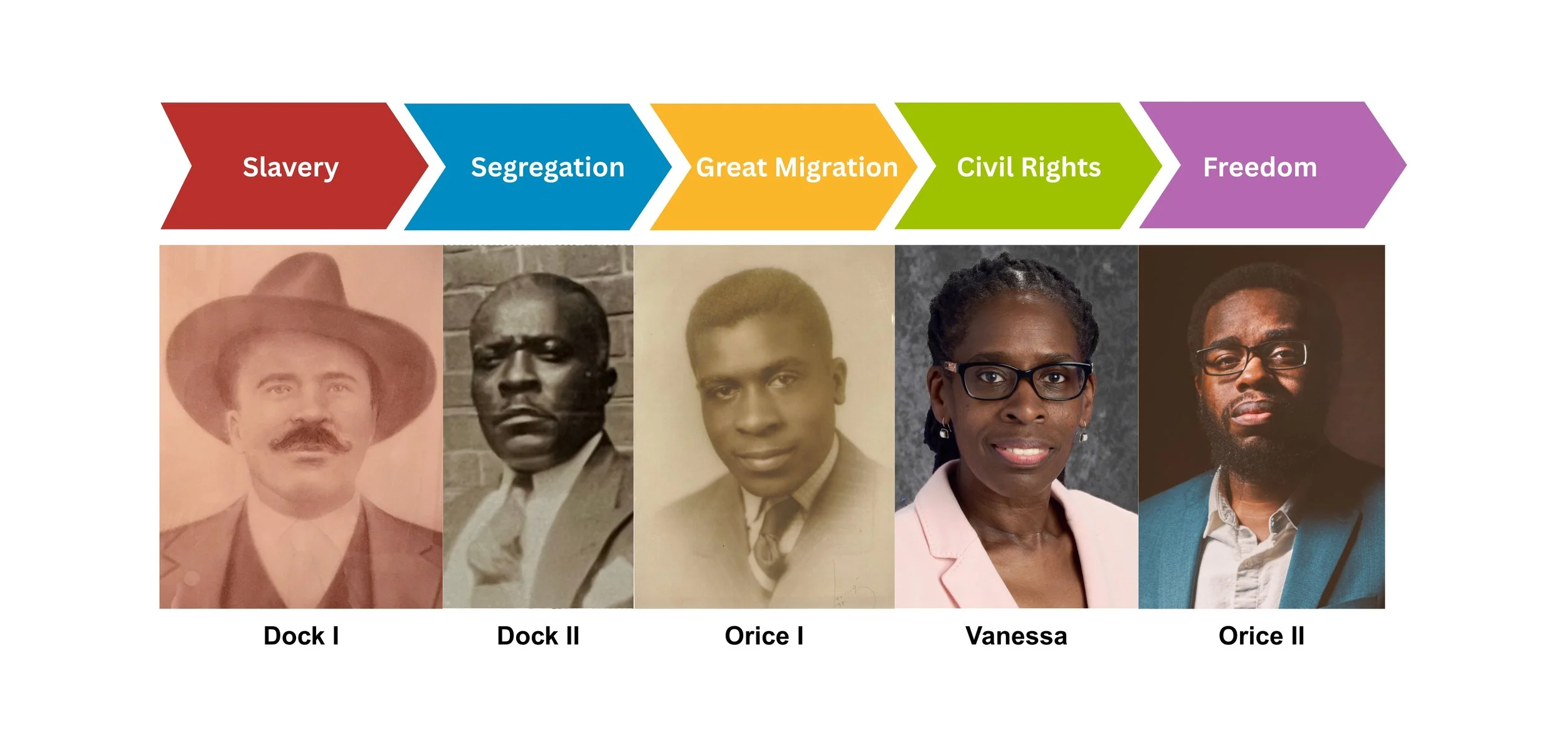
I also know several people whose GRANDPARENTS were enslaved. As you can expect, some of these people are very old, but some are younger than my mother. My Cousin Treva is 97 years old. Her father was born in 1866 and her grandmother was born enslaved in 1841. It should be noted that her father was born only one year after the end of slavery. His three older siblings were enslaved, so Cousin Treva is technically in the FIRST generation of my family born entirely after slavery, and she is still alive. This is not a singular occurrence. Her last living sibling died a few years ago, but she still has a first cousin living! That would be my Cousin Sarah, who just turned 83. She is active, has an iPhone, drives, and uses Facebook. And her grandmother was born enslaved in 1841. Slavery was just the other day.
On the other side of my family, I have a cousin named Frances. She is only 72 years old. She was named after her grandmother, Francis Terrell Hanks, who was born enslaved in 1850. Her father was born in 1883, so he was having children very late in life. Frances isn’t even his youngest child. He had many children and six of them are still alive. Francis Terrell Hanks had a brother named Daniel Terrell who also had children late in life. His youngest son was born in 1915. Daniel was born enslaved in the 1840s, but he has grandchildren alive today in their 80s, 70s, and several still in their 60s. One of them is my cousin Willie Lee Terrell, Jr., who turned 70 this year. His grandson Avieon Terrell was drafted by the Atlanta Falcons in the spring. Avieon was born in 2005, but just like Keisha Lance Bottoms, he can say his great-great grandfather was enslaved. Slavery was just the other day.
Outside of my family, I have several friends whose grandparents were enslaved. These are people in their 60s and 70s, and they aren’t the product of extremely elderly parents. It is not unusual to be about 100 years younger than your grandparents, especially considering how our ancestors were encouraged to have as many babies as possible. Many of the women in my family had children in their 40s, even if they started having children in their teens. That is how we end up with several young people in America who are only three generations from slavery.
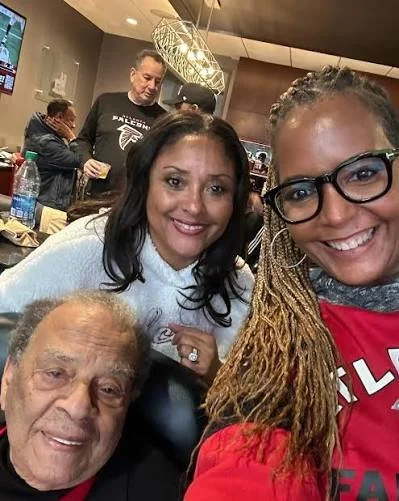
Civil Rights icon and former Atlanta mayor Andrew Young, with current City of Atlanta Council President Marci Overstreet in the back, and former Atlanta mayor/Governor-elect Keisha Lance Bottoms at an Atlanta Falcons game.
One day soon, Keisha Lance Bottoms and my Gen-Z cousin Avieon Terrell will probably be in a room together. Maybe she will be at a Falcons game. Avieon’s older brother AJ also plays for the Falcons. They are also business owners and they have a nonprofit for Atlanta youth. When Keisha and the Terrell brothers cross paths, I will be thinking about their enslaved great-great grandparents. I will also be thinking about their great-grandfathers, John Franklin Peek and Willie Lee Terrell, Sr. They were not born enslaved, but some of their older siblings were enslaved as children. Willie Lee Terrell, Sr. died in 2006. Imagine telling him that slavery is ancient history.
On one hand, it is amazing that these family lines have made it to the Governor’s Mansion and to the Mercedes-Benz Stadium just a few generations after slavery. But on the other hand, it took too long and we still have a long way to go. Before this week, only three Black people had ever been elected governor of an American state. Three people, out of thousands. Now it’s seven people, still out of thousands. I have already seen people commenting that this Election Day showed how systemic racism doesn’t exist anymore. I would argue that systemic racism is alive and well. It will remain that way as long as people continue to act like it disappeared with the election of Barack Obama. Slavery was just the other day.
p.s. - respect to Stacey Abrams.